Italy has only been a unified country since 1861, and the post-unification period marked the beginning of mass emigration, with later waves occurring during the build-up and aftermath of the First and Second World Wars.
An estimated 18 million Italians emigrated between 1861 and 1985. Between 1820 and 2004, approximately 5.5 million Italians emigrated to the United States, while a small proportion also settled in the UK.
If you have Italian ancestry, these websites will help you take your family history research back further. Note that civil registration in Italy was only introduced in 1866. Before unification, records were kept under different regional systems.
Italian ancestry: The best websites
1. Antenati
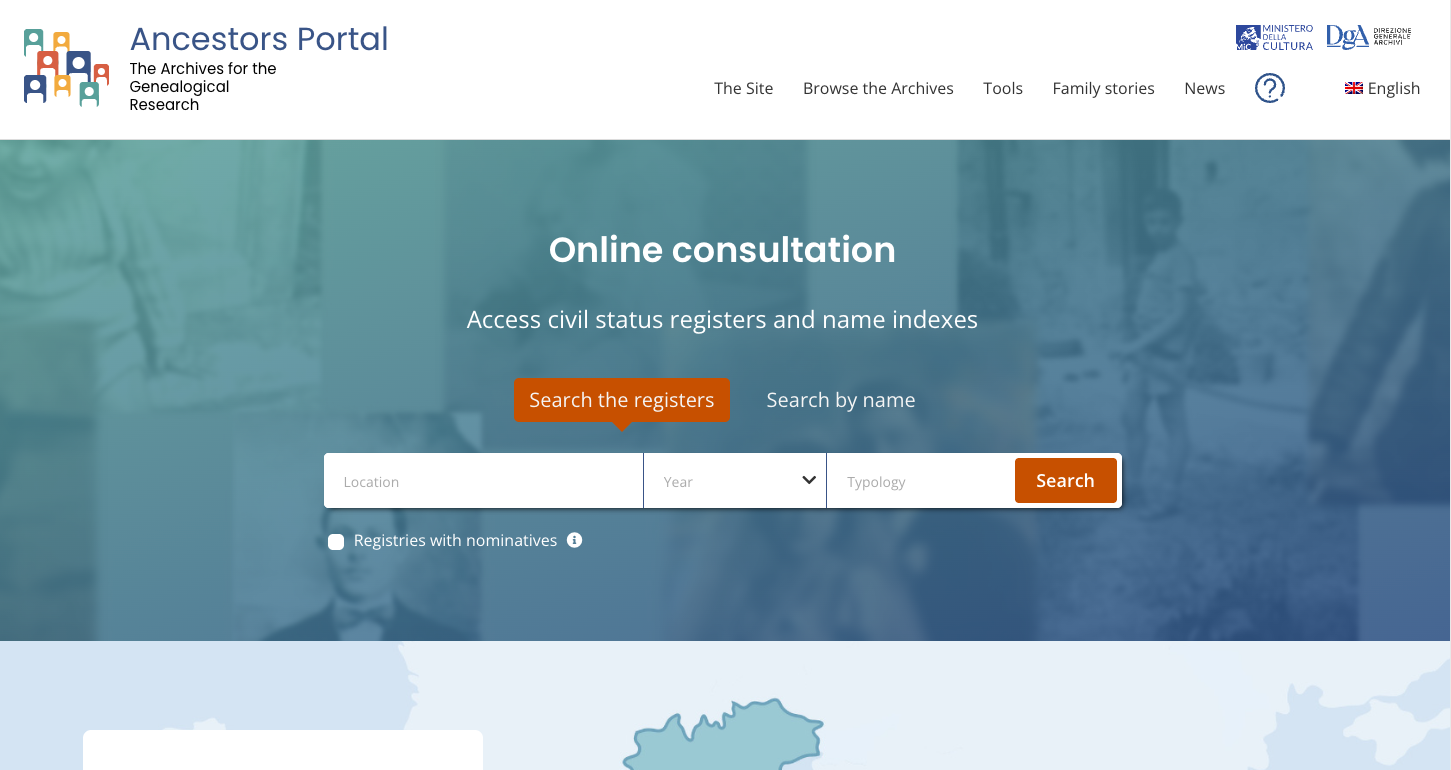
The Italian government’s free genealogical portal has civil records from archives across the country. No account is needed and the site is available in English, though the records themselves are handwritten in Italian. The most useful starting point is the 10-year indexes, alphabetical lists that point you to specific registers containing a full record. These include birth, marriage and death registers, as well as marriage banns, which often contain additional biographical detail, and citizenship documents, which can reveal information about your forebears’ movements – perhaps if they petitioned to move to a neighbouring town, for example. Coverage varies by region and period, so any missing records may simply be held elsewhere or just not yet digitised.
2. Script Tutorial
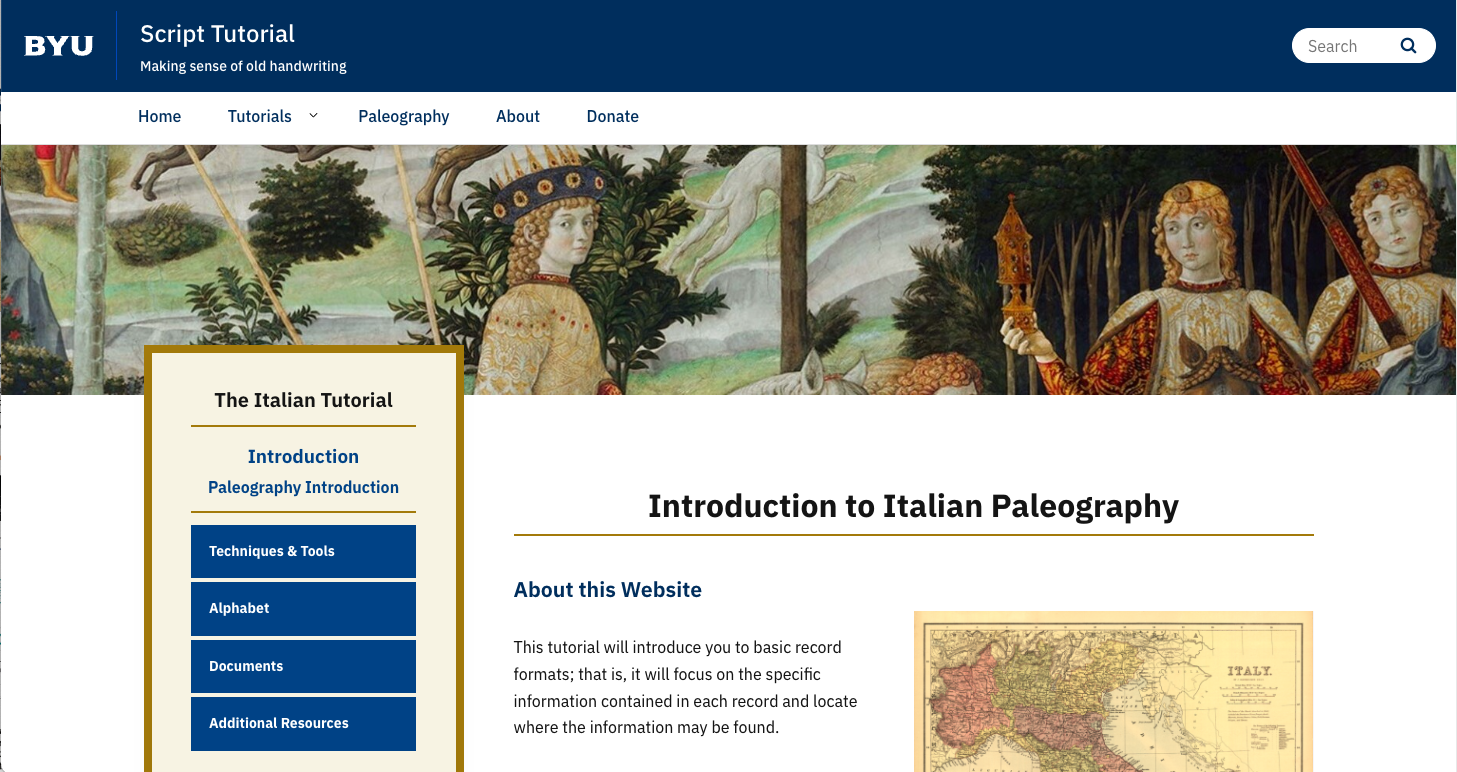
Reading old records requires more than a knowledge of Italian. Unfamiliar handwriting styles, archaic vocabulary, abbreviations and damage all present challenges. This free tutorial from Brigham Young University in Provo, Utah, USA, walks you through Italian palaeography, taking in all kinds of record-keeping conventions, covering language, handwriting, Latin influence, abbreviations and numbers. It also explains the formats of key records. Catholic parish registers – required by the Council of Trent from the mid-16th century – are the most important source for family historians, and the tutorial guides you through birth, marriage and other civil records in detail.
3. The National Archives
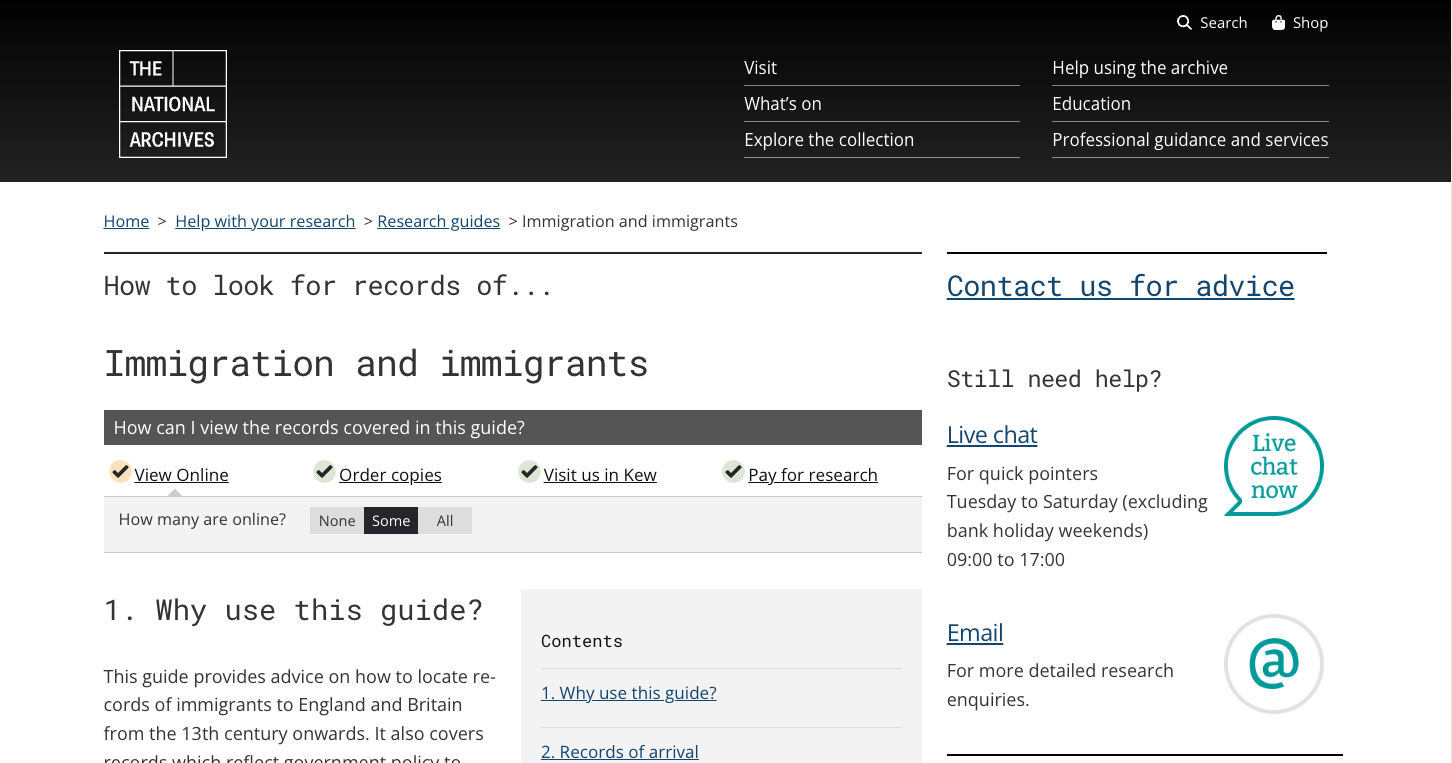
The National Archives at Kew hold immigration and naturalisation records from the 13th century onwards. For Italians, the best starting point is certificates of alien arrivals (HO 2), searchable on Ancestry. Passengers from Europe and the Mediterranean were not required to appear in the standard incoming passenger lists, so these records are often the only paper trail for Italians arriving by sea. Naturalisation certificates, from 1844, record name, birthplace, occupation, and details of spouse and children. Case papers often hold extra biographical detail. And alien registration cards, from 1914, capture address, marital status and occupation.
4. FamilySearch
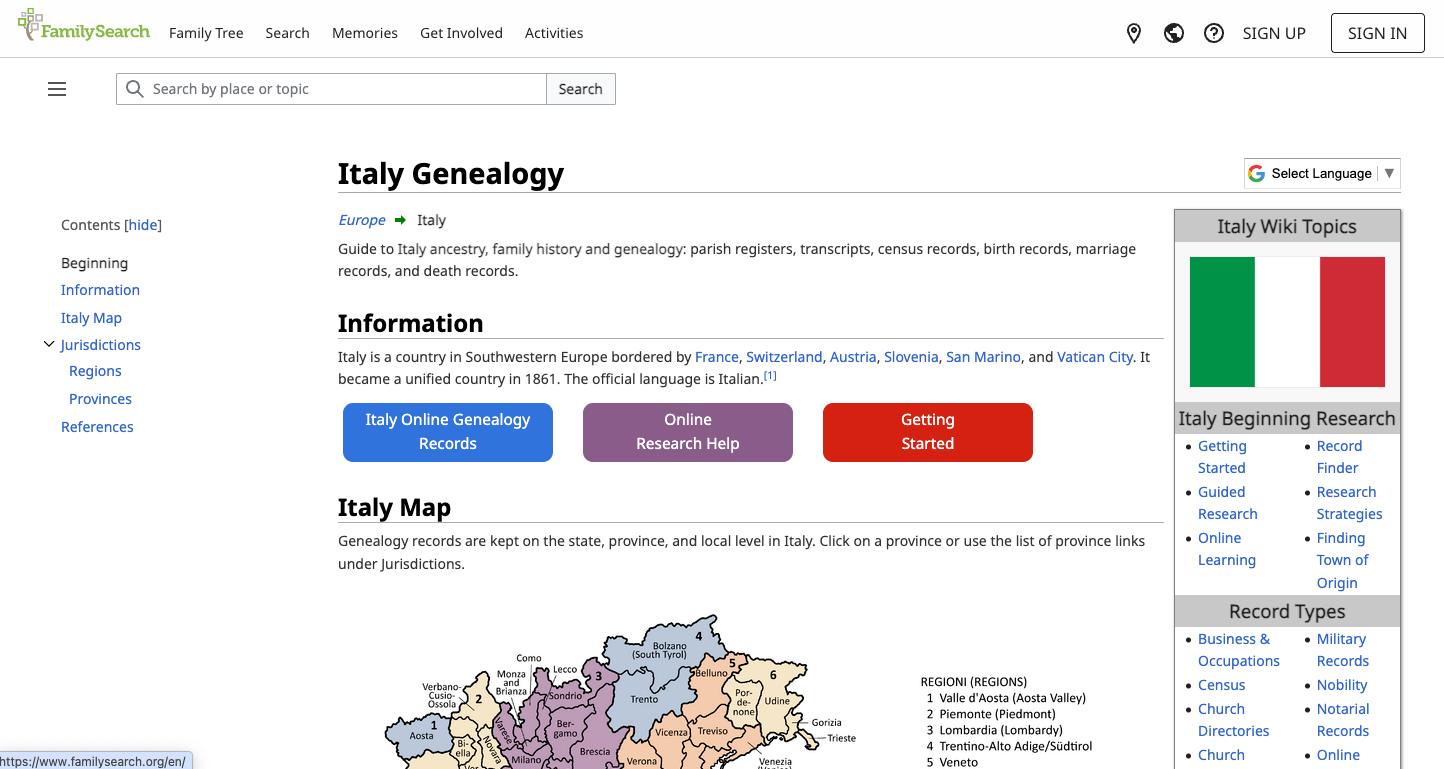
The site’s wiki for Italy is invaluable. Click on any province on the map and you’ll be taken to a brief historical overview and lists of municipalities, each with their own information page. There are details of archives, libraries and societies, plus information about sources.
5. ItalyHeritage
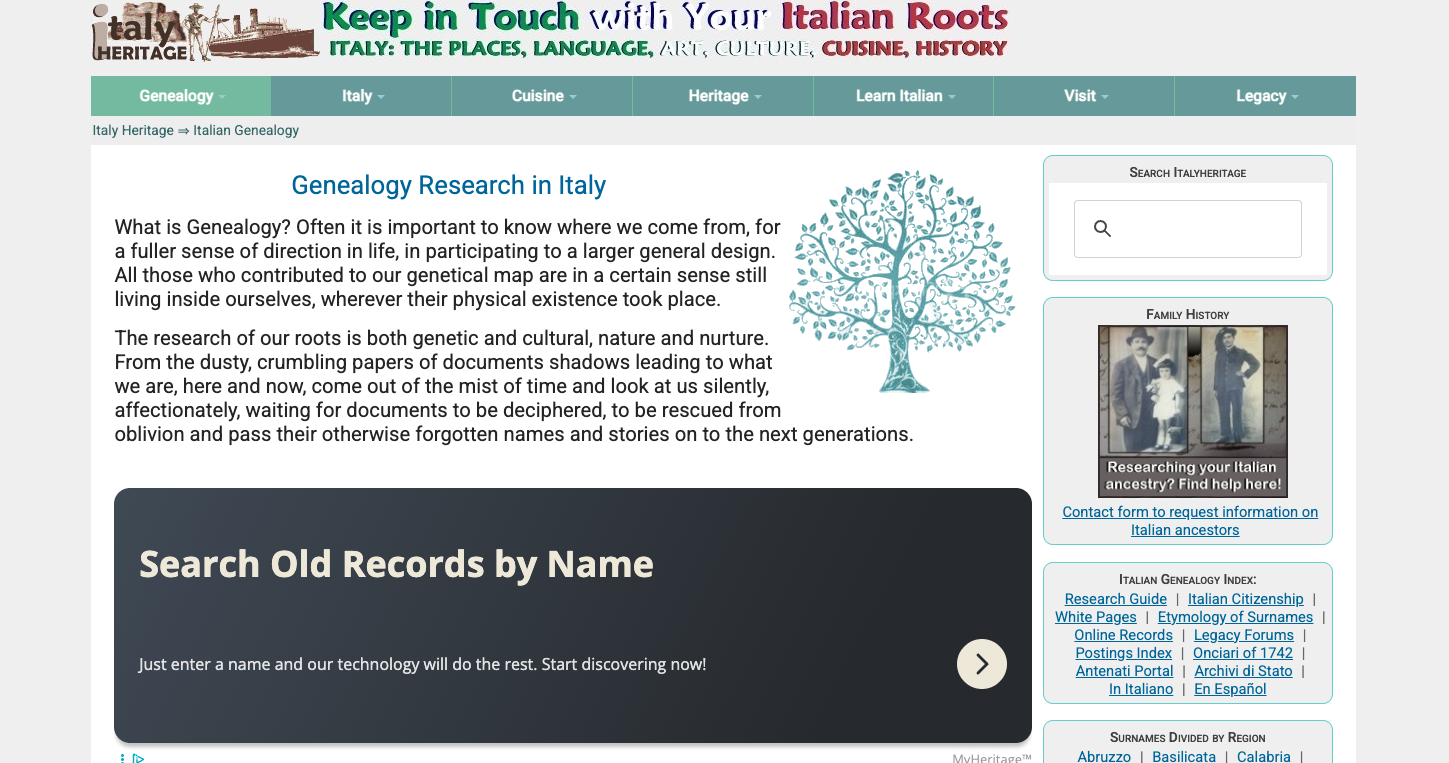
ItalyHeritage has been online since 1998, and remains completely free. Alongside growing provincial databases and a guide to the Antenati portal, it includes an introduction to notarial records – wills and dowry assignments – which become essential once you move beyond civil registration. There’s a searchable index of all 8,000-plus Italian communes and 35,000 smaller localities, valuable for pinning down exactly where your relations lived. There’s also an archive of forum posts going back to 1998, organised by region and province, full of the kinds of questions, queries and brick walls you may encounter.
6. Expert's choice: Anglo-Italian Family History Society
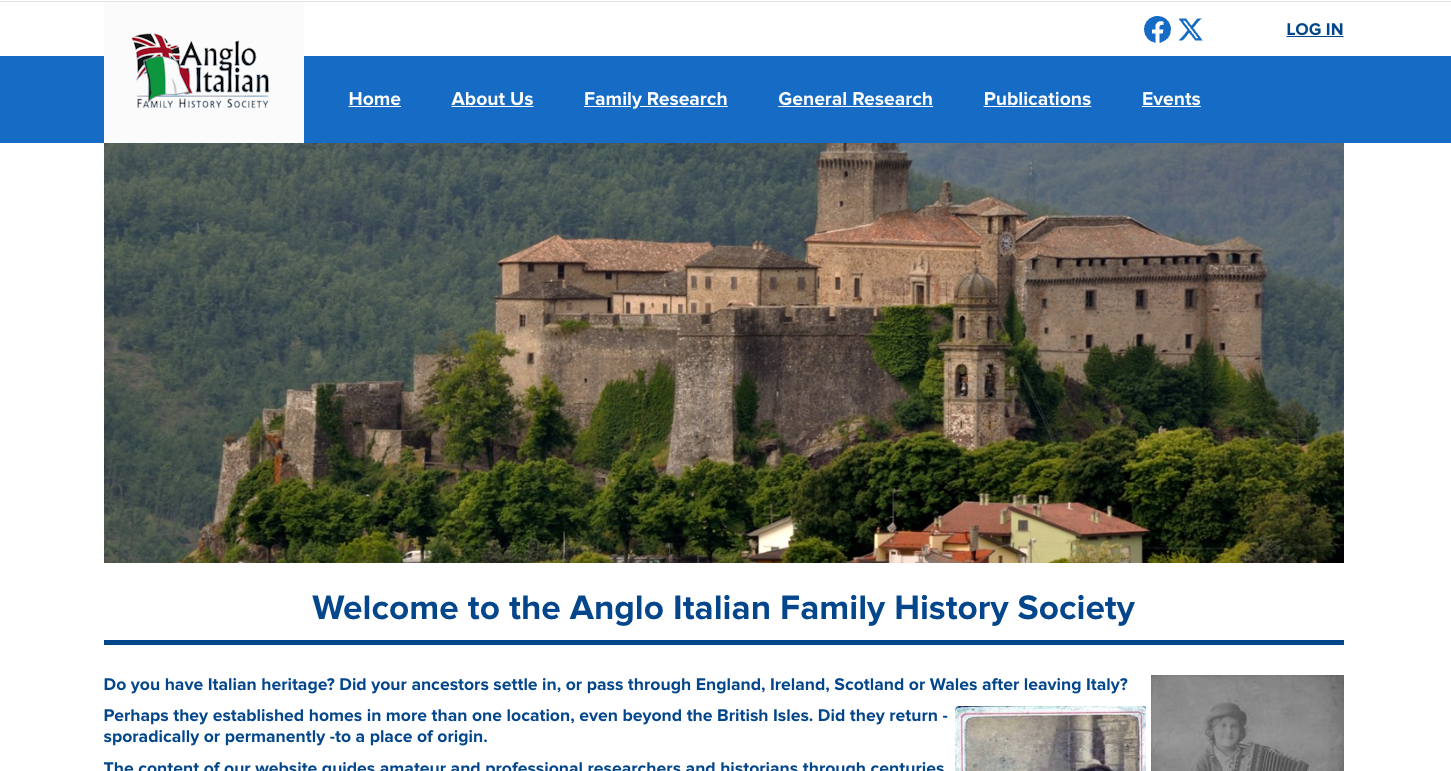
Chosen by Elaine Cordingley, chair of the Anglo-Italian Family History Society:
"The Anglo-Italian Family History Society, which was founded in 2002, provides assistance to those researching their Italian ancestors who had settled in or passed through the British Isles. The current website was upgraded in 2024 to incorporate more information and advanced research techniques. Many sections are available without subscription, and give helpful advice and background information.
"The ‘Research’ section of the website is divided into ‘Family’ and ‘General’ providing information on useful websites and articles for a greater understanding of historical events.
"In ‘General Research’ you’ll find material giving context of Italians in the First World War and the Anglo Italian Military Service Agreement, which 'required Italian men of military age in the UK either to return to Italy for military service or, if they remained, to be subject to the UK conscription laws'. There are also sections on the interwar years and the Second World War, including how to find out more about internment and prisoners of war.
"Joining the society (membership costs £8 a year) gives access to additional material such as a surname search, which will extract all references from the transcribed records. Included in the database are census records, some church records, and records collected from other sites.
"There’s also data extracted from the Guida Degli Italiani in Gran Bretagna (1939–1942), a directory of Italian nationals who were living and working in Great Britain, recording their names and addresses. Compiled under the auspices of the Italian consular authorities, the guide contains business advertisements – some with photographs – and biographies of prominent Italians. This has been digitised by the society, and is not available on any other website.
"Members can also access all previously published society journals, which contain a huge repository of articles for research, and watch recordings of webinars given during meetings."
Italian ancestry: More websites
7. Diocesi e Parrocchie
Search a directory of parishes and dioceses in Italy, with histories and archival contact details.
8. Direzione Generale Archivi
The General Directorate of Archives oversees the country’s state archive network.
9. Google Translate
Via the ‘Websites’ tab you can paste any URL and choose the target language. Also users of Google Chrome can translate any web page by right-clicking on it and selecting ‘Translate to English’.
10. Italian Genealogical Group
This research group is based in the USA.
11. ItalianGenealogy.com
You can find a host of articles here, such as one on Italian naming traditions, plus a busy forum.
12. Italians and the UK
Learn the story of Italian migration on this site.
13. Liverpool's Italian Families
This is one of several regional websites found through the Anglo-Italian Family History Society. Other helpful regional sites include Manchester’s Little Italy and, for Sheffield, West Bar Italians.
14. National Library of Scotland
A data layer from the library’s old maps portal shows Italians resident in Scotland in the 1930s.
15. Our Migration Story
Here you’ll find interesting social history material about Italian communities in Britain.