At the start of her episode of Who Do You Think You Are?, Olympic silver medallist Katarina Johnson-Thompson says she wants to find out more about her family history on her father’s side. Her father, Ricardo Thompson, was from the Bahamas and died in 2017.
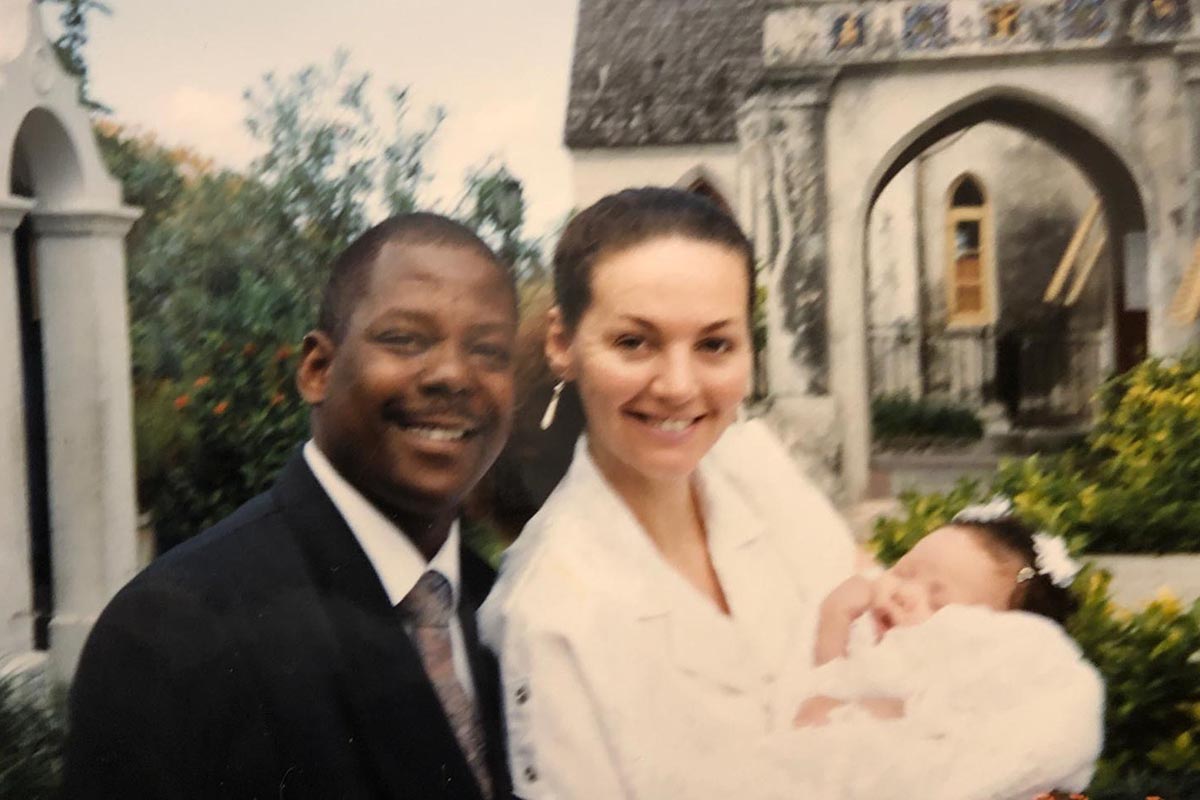
“It’s definitely given me the impetus to find out who I am,” Katarina says. “Going into the unknown is quite scary but I’m ready for the challenge.”
Katarina flies to the Bahamas, where she meets her aunt Toni. They remember Ricardo and Toni’s mother Mary, the matriarch of the family, but they don’t know much about their father. Toni tells Katarina that her paternal grandparents were called Elvin and Clara Thompson. She knows that Clara moved to the USA and lived to be one hundred years old.
To find out more, Katarina goes to Elvin and Clara’s church in Foxhill. There, she meets researcher Francine Russell, who tells her that Elvin and Clara were married in the church in 1931. Their marriage record shows that Clara’s father was called Matthew Farrington. His father was also called Matthew and the family lived on the Exumas (famous for their swimming pigs).
At Black Point in the Exumas, Katrina meets historian Dr Grace Turner, who has what she thinks is Matthew Farrington Senior’s birth record. It says that his parents were Clarence and Fanny. In 1857, Clarence purchased 20 acres of land for £6. The British sold a lot of plots of land to former slaves after the abolition of slavery and Clarence would have had to work hard to afford it.
Grace also shows Katarina a passenger list record which shows that Matthew Farrington Junior – her 2x great grandfather – sailed from the Bahamas to Miami in 1913.
“I can definitely relate to him,” Katarina says. “He had that wanderlust where he wanted to explore the world and see what’s out there.”
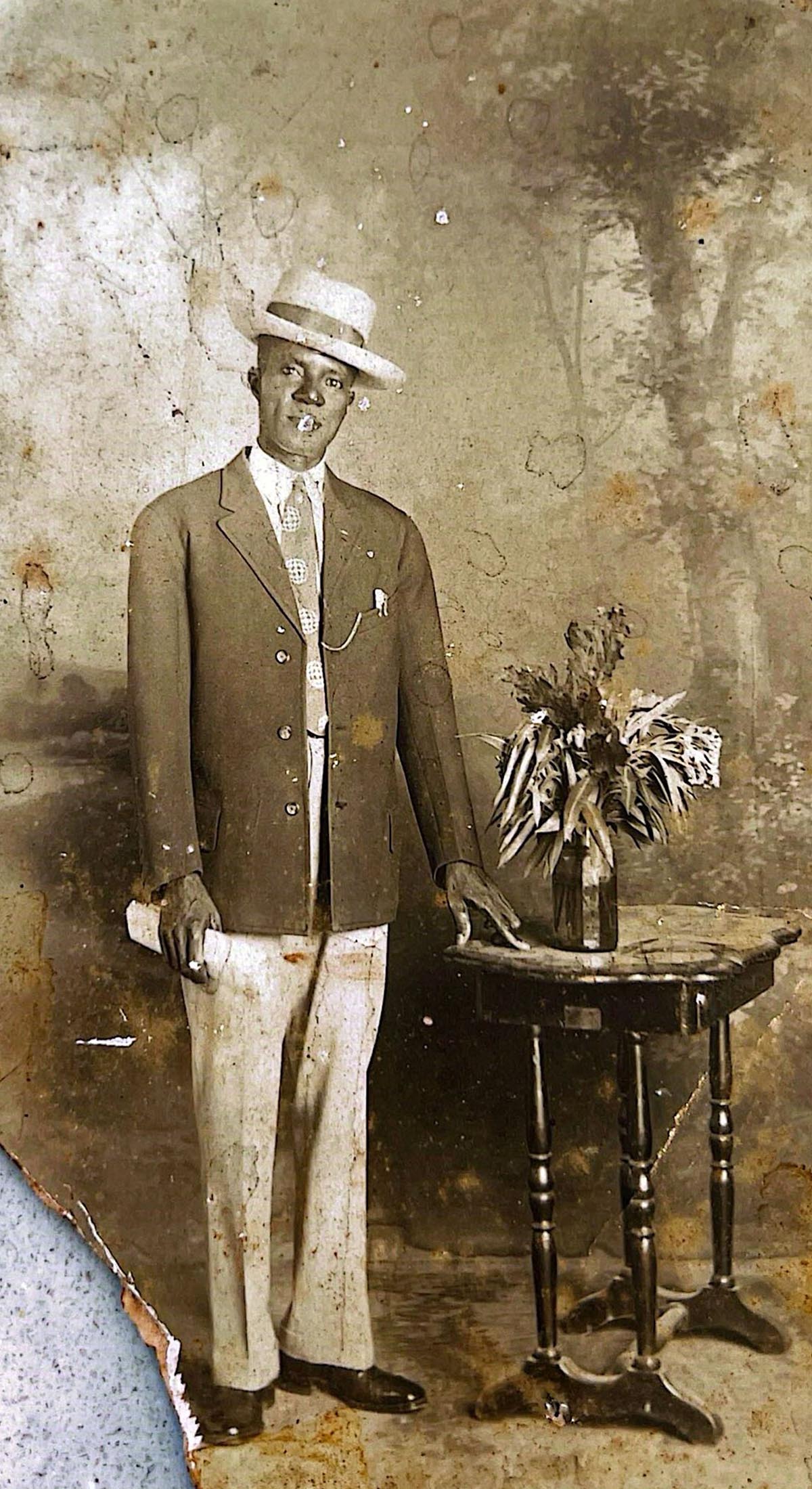
She goes to Miami and meets historian Nadege Green, who’s able to show her an old photograph of Matthew. At the time, the Florida Keys were being developed into the city of Miami. Many Bahamian immigrants came to the city in search of work. The 1920 US census shows that Matthew’s wife and children eventually came to join him.
At the time, Miami was racially segregated by the Jim Crow laws. The Farrington family lived in poverty in the city’s ‘Colored Town’. An old newspaper article shows that Matthew’s brother Timothy was harassed by police while walking in the street and arrested for ‘vagrancy’.
“The basic human right of not being able to walk down the street without having an excuse – it makes me feel a bit sick and sorry,” Katarina says.
Sadly, in 1920 Matthew’s wife Emily gave birth to a daughter who died soon after birth, and died herself just a few days later. Another of the couple’s children, Margaret, also appears to have died, as she disappears from the records.
In 1924, Matthew applied for US citizenship. The record shows that by that point he’d remarried and his daughter Clara was living in Nassau. Matthew may have sent Clara away because the black community in Miami at the time was under attack from the local chapter of the Ku Klux Klan.
Katarina is shocked: “They’re getting terrorised in their own homes.”
Records also show that Matthew joined the Prince Hall Masons, an African-American order of the Freemasons, which helped empower and protect the black community.
Katarina is invited to attend a church service for local Freemasons members and learns more about the values of the Freemasons and how they helped finance schools and medical services.
Matthew died in 1975, survived by relatives including Clara.
“It looks like he lived a happy, poignant, powerful life, and he was well-respected, well-loved,” Katarina says.
Katarina also wants to find out more about Clara. She meets another relative in Miami – Clara’s granddaughter and adopted daughter Leslyn, Katarina’s first cousin once removed.
Leslyn tells her that Clara had a hard upbringing in Nassau because she had to work to support the family and could only go to school part-time. She was very active in church.
Katarina visits Clara’s old church, where she meets the church deaconess Cecily Robinson-Duffle, who remembers Clara as her old Sunday School teacher. She says Clara was very involved in the civil rights movement, which campaigned against segregation and for voting rights for black Americans. She was one of the “people at the back of the line” who were vital to the movement’s success.
“Every time I go to the Bahamas, I feel a sense of sadness because of my Dad,” Katarina says. “But now I feel like I have other stories to tell and I feel like I’m doing him proud, telling these stories of his family. Doing this in his memory is definitely something that is very special to me.”