The Irish census records for 1901, 1911 and 1926 (for the Irish Free State or modern-day Republic of Ireland only) are available on the National Archives of Ireland's website.
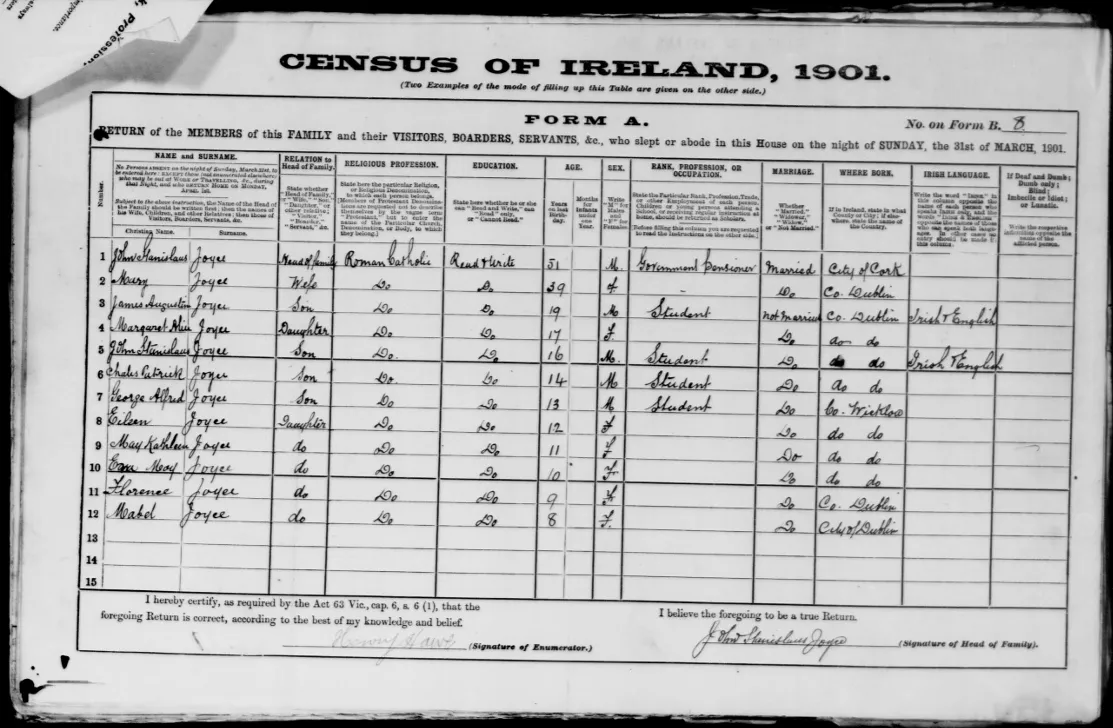
The first Irish census was enumerated in 1821 and every decade thereafter until 1911. However, the returns for 1861–1891 were pulped in the early 20th century, and in 1922 the majority of returns for 1821–1851 were destroyed in a fire at the Public Record Office of Ireland in Dublin during the Irish Civil War. However, 60,000 19th-century census records have now been recovered and published on the Virtual Record Treasury of Ireland, an attempt to reconstruct the Public Record Office online, and some census fragments are also available on the NAI's website.
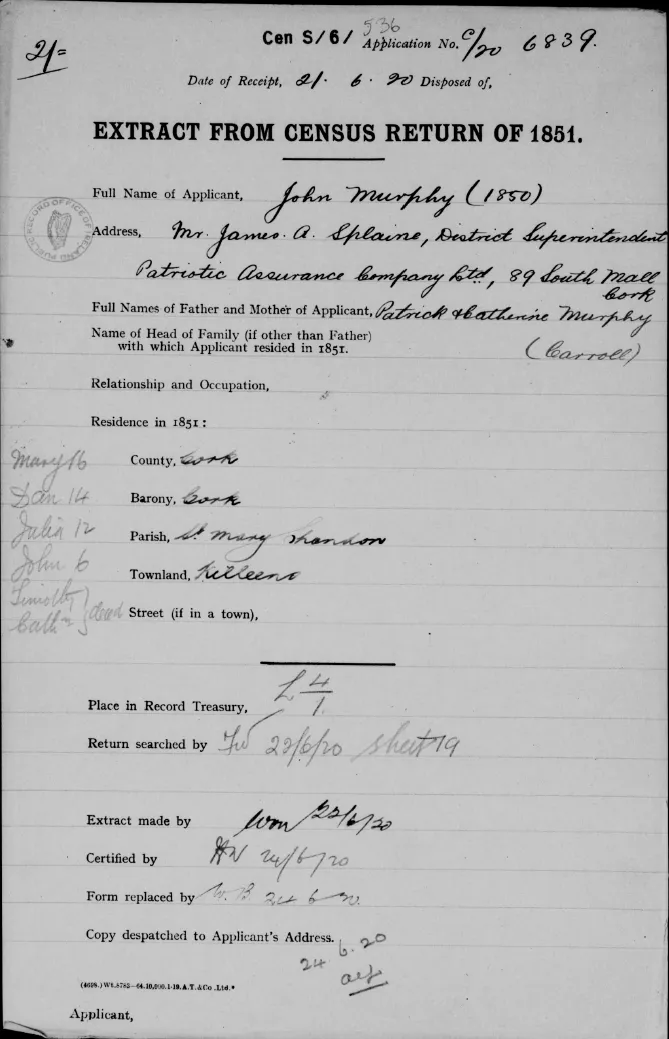
When the old age pension was introduced in Ireland in the early 20th century, many applicants could not provide a birth certificate to prove their age, because they were born prior to the start of civil registration in Ireland in 1864. Instead, applicants could request a search of the 1841 and 1851 Irish censuses for evidence of them in their family home, which was considered acceptable proof of age. These census search forms are online (see example below).
Also, some of the Irish census returns that were destroyed in 1922 had already been transcribed by Irish genealogists such as Gertrude Thrift during their research. The transcriptions often relate to specific surnames found in a parish, and if your family happened to be the focus of their research then you may get lucky. The lists on Grenham’s Irish Ancestors website indicate whether there are such ‘Thrift Abstracts’ for early census returns for certain parishes. The original transcripts are held by the NAI.
Griffith’s Valuation and other Irish census substitutes
The destruction of 19th-century Irish census records has created a huge gap for those researching their Irish roots. However, since 1922 Irish genealogists have been seeking out sources that can act as substitutes for the lost census returns.
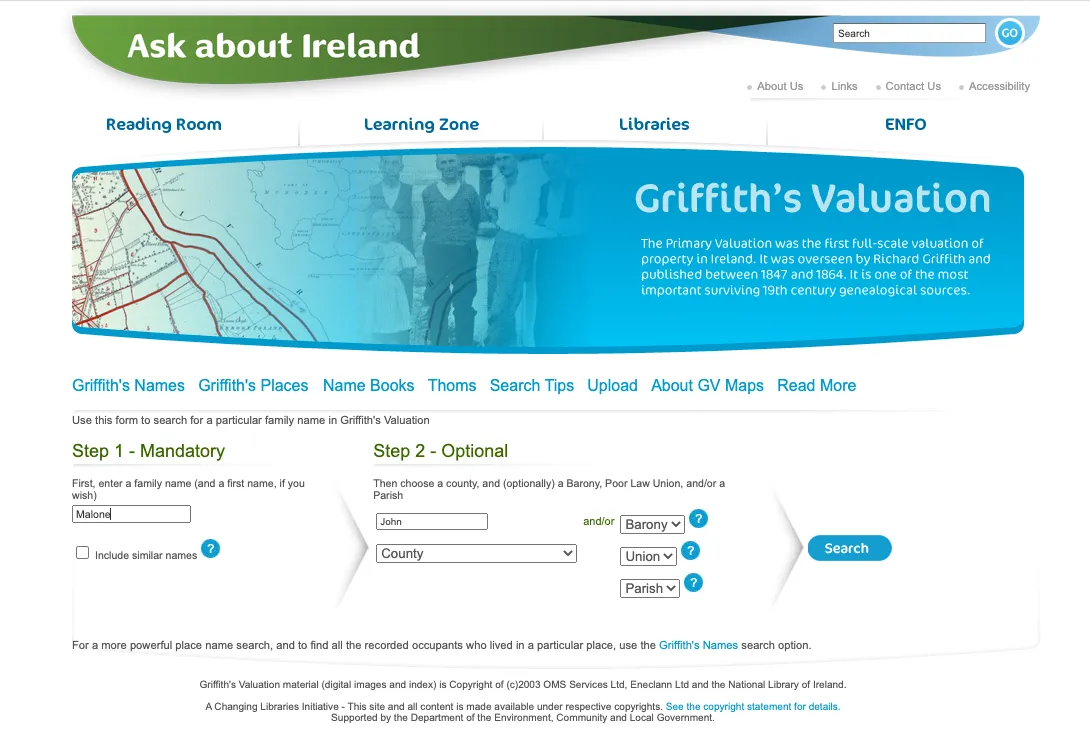
The key census substitute is the Primary Valuation of Ireland, also known as Griffith’s Valuation after Richard John Griffith, the engineer commissioned to conduct it. The survey, published between 1847 and 1864, was undertaken to establish the value of every house and land holding for the purpose of levying a property tax. Griffith’s Valuation can be searched at Ask About Ireland.
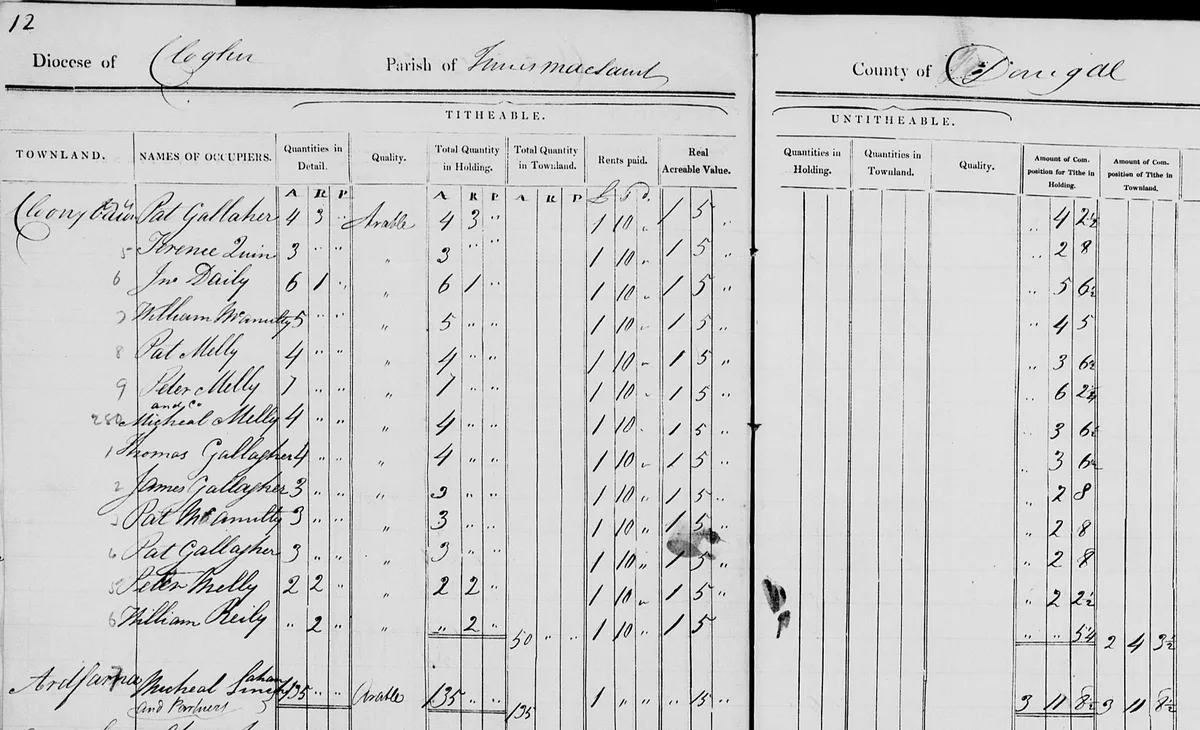
Another source that is related to land is also a very useful census substitute. The Tithe Applotment Books are a similar nationwide survey, undertaken between 1823 and 1838 to assess the rate of the tithe: a religious tax that was levied on the output of agricultural land. The Tithe Applotment Books also enumerated the landholder, responsible for paying the tithe, at a particular time. However, as this survey was limited to agricultural land it largely excludes householders who lived in urban areas. Tithe Applotment Books are available online at the National Archives of Ireland and the Public Record Office of Northern Ireland.
All counties are represented in Griffith’s Valuation and the Tithe Applotment Books, although there are some parishes missing from the latter. However, not all of the sources used as census substitutes exist for every county. Genealogist John Grenham has spent his professional life ferreting out published and manuscript lists that document the population for each parish in Ireland. These include lists of subscribers, memorialists or petitioners to a particular cause; records of voters and freeholders; and local censuses undertaken by the parish priest. Anything that might identify an individual in a specific place at a specific time is listed on his site Irish Ancestors.
The loss of the 19th-century census returns for Ireland is not a cause for despair, but for additional and focused sleuthing. The population of Ireland was generally quite static. If you can find a townland address for a family by using Griffith’s Valuation, you can focus on other sources that document the occupiers of the townland and extract records matching their particular surname. These records can be pieced together to create a picture of your forebear’s household, even in the absence of 19th-century census returns for Ireland.