
When we are searching for records of our ancestors, it can be easy to dismiss those where the surname does not match exactly with how we are used to seeing it spelled. The name may have an additional letter, be pluralised, be spelt phonetically or in some cases be a different surname altogether. In fact before the standardisation of surname spellings, we may find several variations of our forebears’ surnames.
Some surnames are patronymic meaning they originate from a person’s father (eg Robertson); some were allocated according to a person’s occupation (eg Carpenter); some are topographical and named after a feature of the landscape (eg Hill); some are characteristic of a person’s physical features or aspect of their personality (eg Wise); and others are habitational ie named after a person’s birthplace or place of residence (eg Stafford). Knowing a surname’s origin can sometimes explain a change in spelling. For example, if a person had a habitational name such as Lichfield but their descendants moved far from the Staffordshire town, then a parish clerk would not know the ‘correct’ spelling and might write “Litchfield”.
Indeed, it was only in the 19th century that a majority of our ancestors became well educated enough to spell. Prior to this, the spelling of a name was decided upon by the person who was writing an official document, such as a parish register. This clerk or parish official would make their best guess according to our relation’s own pronunciation. This is why certain regional accents can change certain surnames, particularly adding or taking away an ‘h’ to the start of a name that is followed by a vowel, for example Hackley and Ackley.
There are a significant number of examples of small spelling variations. This may be the appearance or disappearance of a letter, such as Isaac to Isaack. It could also be a change of vowel, such as Wise to Wyse. Spellings may change so that they appear differently but sound the same phonetically, such as Croad and Crode. Names were often pluralised or had the last ‘s’ taken away, for example with Bett and Betts. As we trace our tree further back, names begin to appear more archaic as with Pheasant changing to Fesant. With cases such as these, it can help to speak a name aloud to think of other possible spelling variations. How could a name have been misheard, and what might it have changed to?
For example, my Osment branch is frequently recorded as the more commonly known Osmond. I also have Neals that change to Nailes, and Terrys that turn to Tarryes. Care should be taken to ensure that you are tracing the right family, and that a nearby family with a similar surname is not being traced by mistake.
It can be difficult when trying to prove that a document relates to your forebear in cases of a surname alteration. The best way is to check as many documents as possible relating to both names. For example, if you are looking for the baptism record of a Thomas Davidson but the only entry that seems to fit is for a Thomas Davison, then you will need to thoroughly check other records from the area before confirming the person’s identity as one and the same. It may be that they are two separate people.
Identifying a variant
Firstly, check for any burials of the person with the surname variant. If there is none locally, check other records including marriage registers, tax lists and probate records. Try tracing other siblings of Thomas to see if their surname changes in the same manner. It may be that siblings born later than your ancestor were baptised under the name you are more familiar with.
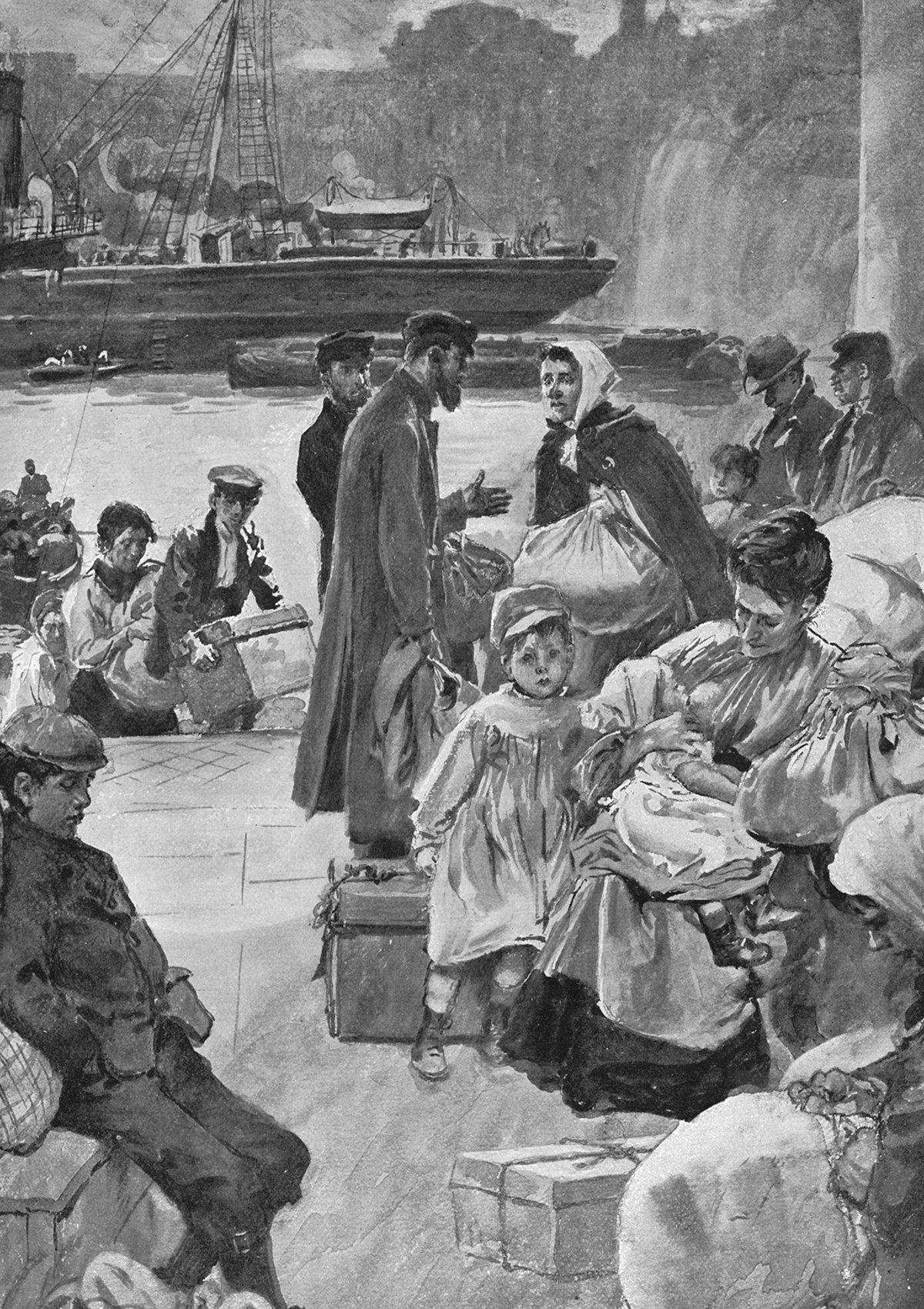
As well as the unintentional changes to a person’s surname, there are numerous cases of people deliberately changing their surname for a particular reason. For example, many of our migrant relations chose to anglicise their surnames to sound more British. You may be researching a branch of your Thomas family tree only to be surprised to find that the name originated in the Russian name of Tolmasoff.
For those of us with repeat criminal offenders in our tree, we may find that they had a long list of aliases. These may be written collectively in prison registers, court records or old newspaper articles. Some of our forebears changed their name to avoid being found by the authorities, such as with cases of bigamy and military desertion. Other relations may have changed their name to disassociate themselves from their family after a criminal trial, or because of a bad reputation in business.
Also, if a distant relative of a testator wished to inherit their estate then it was sometimes a requirement within the will that the inheritor change their surname to that of the deceased. For this reason I have a long branch of my Janes line being referred to as ‘Janes alias Hopkins’, since the Janes family inherited the Hopkins’ estate. Where you find aliases in your tree, it is necessary to search for all of the possible surnames when looking for records. There are many examples where a document will give both surnames but only one has been transcribed into an online database.
You may also find a change in cases of illegitimacy. An unmarried mother is likely to give her child her own surname at their baptism. The father’s name may be recorded as a middle name. If the mother later marries, she may decide to bring the child up with her new husband’s surname, even if he is not the father. My husband’s paternal grandfather was born Vernon Cook in 1921, son of unmarried mother Gladys Cook. When Gladys married Patrick O’Shea a few years later, the couple decided to raise him as Vernon O’Shea.
Where a person’s surname has changed entirely, there are various documents that can help. Wills can be the most useful. The testator will often give the full names of their children, siblings and other relatives due to inherit, and where their relationship is also stated this can give you fairly solid proof of identity. Settlement records, particularly settlement examinations, can also give proof as to a change of name, because these can act as a biography of your ancestor. You may also find evidence of surname changes in newspapers, court records, title deeds and divorce records.
In addition, it is widely believed that a deed poll is necessary to start using a new surname, but this has never been a legal requirement so long as the reason is not fraudulent. It is certainly more complicated to change a surname today, because of the need for our identity documents to match. In contrast the likes of passports and driving licences were of no concern to our forebears.
Finally, if one of your ancestors was recorded under a wide variety of surname spellings in their lifetime, which is the correct surname to record them under on your family tree? There is no definitive right answer, but most researchers use either the surname they were baptised as or the name they were most commonly recorded under.
Testing surname changes with DNA tests
Autosomal DNA tests look at both your mother and father’s lines, and are the most commonly used test. The results can help you to prove your tree back five or six generations, depending on which branches you have inherited the most DNA from (usually measured in centimorgans, abbreviated to cM). Your cousin matches may help to prove a theory about surname change if they can be linked back beyond the brick wall that you are trying to break down. Be careful when viewing other peoples’ online trees, and always make sure that the DNA match lines up with several sources of documentation before adding a person to your own tree.
The results of a DNA test may help you to confirm any unexpected findings of ethnicity in the case of anglicised surnames. Ethnicity findings are a relatively new science, and results are usually updated once a year on genealogical websites as their database grows. Be sure to check for any further improvements in accuracy that could help you to confirm a foreign branch.
Another popular test is based on the Y-chromosome DNA (Y-DNA) inherited by a son from his father, so can only be taken by males. It is often expected that matches will share the test-taker’s surname and that of his father, paternal grandfather etc. However, a wide variety of surnames may appear in the matches because of how surnames change over time.
Using wildcards to research surname changes
Whether you’re looking for your ancestor online or viewing physical records in person, you need to bear all likely spelling variants in mind, because a failure to do so is a common reason for research brick walls. If you’re working with online databases and catalogues then wildcards – symbols used in place of letters – will return a wider diversity of search results.
Particularly helpful is ‘?’ which can replace a single letter in a person’s name, meaning searching for ‘B?ll’ will return results relating to Ball, Bell and Bull among others. Another excellent option is ‘*’, which will match with more than one character.
For example, searching for ‘Osm*’ will give results for Osment and Osmond, as well as any other names that have been transcribed as starting with those three letters.
Also, using a wildcard may enable you to find an erroneous transcription relating to your forebear. Try searching on different family history websites and you may uncover different results depending on how a record has been transcribed. This is particularly relevant in the case of illegible handwriting or uncommonly spelled surnames.


