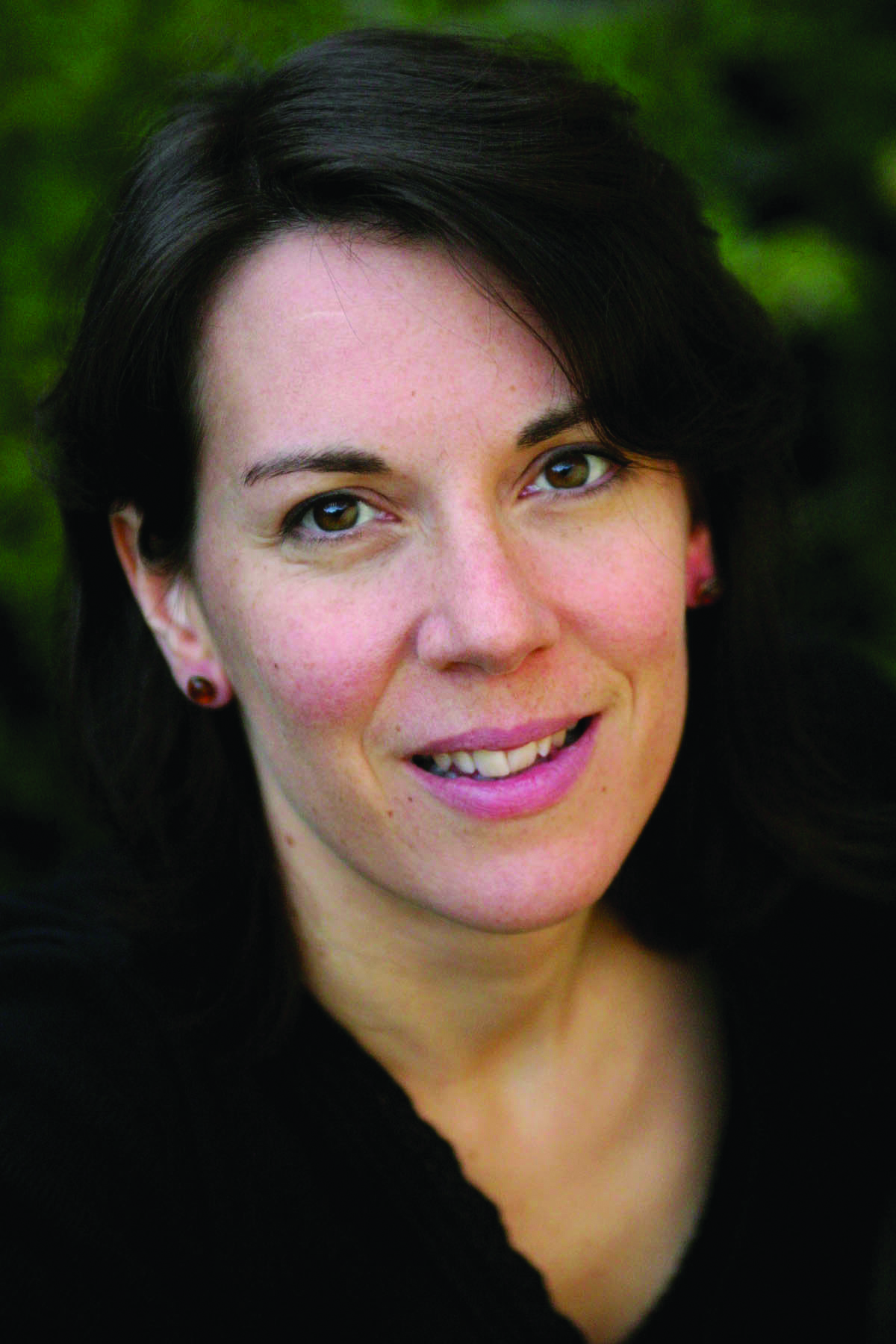
Laura Olmsted’s life changed forever in 2018 when she took an AncestryDNA test for fun. “To my shock, I discovered that the man who raised me was not my biological father,” says Laura, who lives in Illinois, USA. “Solving my own case opened the door to discovering my talent for interpreting DNA results and resolving misattributed parentage.”
Laura and a small group of friends began advising people in their online genealogy communities. “Helping others quickly became a passion. At the time, adoptees, donor-conceived individuals and people experiencing a DNA surprise often had no affordable resources for identifying biological parents. We eventually formalised our efforts as a nonprofit organisation DNAngels, because it became clear that this work was bigger than any one of us.”
Like Laura, many family historians will have spat into a tube, sent it off to a DNA lab to be analysed, and eagerly studied the results on screen trying to make sense of them. “DNA can unlock truths that are extraordinary, beautiful and deeply heartbreaking – often all at once,” says Laura.
Marginalised communities
Clients come from many different backgrounds, and include individuals who have seemingly insurmountable brick walls further back on their tree. They’re often from marginalised communities too including, in the USA, “a large population of African-American clients whose cases involve navigating records affected by slavery, endogamy [marrying within one’s own group] and migration patterns”.
For anyone searching for a biological parent, the service is free. “We never want financial barriers to prevent someone from discovering the truth about their origins. Donations are welcomed and appreciated, but never required.”
One of the most challenging cases Laura worked on involved a man called Bruce whose family history was filled with generation after generation of misattributed parentage. “None of the expected parent–child relationships aligned. I was left with several separate DNA networks that somehow had to be tied together.
“For nearly three years, I worked through each group of matches, building out trees, running cluster analyses, and searching for overlap where none seemed to exist.”
The breakthrough finally came when a half-niece tested. “She matched all the disparate networks I had been trying to assemble. Her appearance in the data was the key that unlocked every mystery, and it led us directly to Bruce’s biological truth.”
Stunning discoveries
Other cases that stand out include a young woman who contacted DNAngels feeling that she’d never quite fitted with her family. “When she tested with Ancestry, she received a direct match to her biological father, confirming her suspicions. Unfortunately, he had already passed away and the small tree attached to his DNA gave us very little to work with.”
Uploading her tree to MyHeritage proved to be the key. “There, she matched her paternal grandmother, giving us two solid generations on her father’s side. As I built out the paternal family tree, everything fell into place – and what I discovered stunned even me. Her biological father was a very well-known Hollywood actor.”
The client was never officially adopted, so there was no paper trail. Her mother was unable to look after her when she was born, and her grandmother simply found someone else to take her.
The first step for a client is to fill in a form with some background information. A member of the DNAngels intake team will then contact them for a brief chat about what they are hoping to discover, and to give them reassurance. “After the interview, the case is reviewed. If approved, it is placed into our queue and assigned to the next available research team.”
Any additional details needed are gathered and the case is passed to the genetic genealogists who start the technical work, scrutinising the DNA results. They are supported by research assistants who consult historical and contemporary records. The techniques that the genetic genealogists employ include clustering DNA matches, sorting them into networks (usually four big groups: maternal grandfather’s side, maternal grandmother’s side, paternal grandfather’s side and paternal grandmother’s side), and examining where these intersect to identify shared ancestral couples or specific branches that connect to the client. They also create timelines using contemporary records and archives to narrow down the field of candidates. “Once a likely grandparent or great grandparent set is identified, we build out all known descendants to determine who could realistically be the biological parent based on age, proximity and circumstance.”
Sometimes they’ll recommend additional relatives get tested to confirm or eliminate a hypothesis. If all else fails, they suggest clients test directly with other major DNA companies including MyHeritage and 23andMe.
“Once we’ve identified the likely biological parent, we schedule time with the client to present the evidence clearly and compassionately. We talk through how we reached the conclusion, what supporting records we found and what the next steps might look like.”
What does it take to become a DNAngel? “We’re always open to new volunteers who have a solid foundation in genetic genealogy and a genuine passion for helping others. Many of our volunteers have lived experience as adoptees, donor-conceived individuals or people who’ve had their own DNA surprise. Others come from backgrounds in genealogy, research, science or social work. What unites everyone is a commitment to helping others find answers, healing and identity.”
A Cherubic beginning
DNAngels has developed a structured training and mentoring programme to ensure clients receive the highest standard of support and research. Volunteers begin as ‘Cherubs’. “They observe active cases, learn our methodologies, and receive mentorship from experienced genetic genealogists. From there, they progress into roles that best fit their skills and interests.”
All volunteers are given training in DNA methodology and inheritance, match-clustering, network-sorting and family tree construction, as well as sensitivity around adoption, donor conception and DNA surprises.
Laura says that DNAngels goes above and beyond other DNA-interpretation services when it comes to the amount of support provided. “If the client wishes, we can help draft first-contact messages, prepare outreach scripts, or simply be there to talk through their feelings. Our goal is not only to give clients answers, but to guide them through the emotional and relational steps that follow – because identifying the truth is one thing; learning how to live with it is another.”
Laura launched DNAngels in the UK in 2024, when Prof. Turi King, director of the Milner Centre for Evolution at the University of Bath, got in touch. Prof. King, who led the DNA verification of the remains of Richard III, was receiving many requests from people searching for biological parents, but she didn’t have the time to help, so she wondered if DNAngels could. “Our UK team is smaller than the US one, but the work it does is just as rigorous. The reception from the UK community has been extraordinary.”
For Laura and the other angels, the highlight of their work is when a client learns their truth for the first time. “Whether it’s tears, relief, shock or joy, those moments are the heart of our mission. DNAngels was founded on compassion, collaboration and the belief that everyone deserves to know where they come from, and those values continue to guide us in every case we take on.”