
The Victorian age is full of excitement for family historians. It’s here that we often start our quest – there are detailed records, photographs regularly survive and it’s almost within living memory, so we usually feel particularly attached to our Victorian ancestors.
But Queen Victoria and Prince Albert personify an absolutely fundamental problem for any budding genealogist. There is evidence according to AN Wilson in his book The Victorians that their fathers were the victims of ‘paternity fraud’ or, as it’s officially known, a ‘false paternity event’. This is when a woman has an affair and becomes pregnant by her lover, but the child is passed off as her husband’s.
How common is paternity fraud?
What Shakespeare called ‘cuckoldry’ is not limited to guests on The Jeremy Kyle Show. Male anxiety about raising children that are not theirs is the root of many historical restrictions on women and of severe punishments for female, but not male, adultery. The last woman in England to be executed for adultery was Susan Bounty in Devon in 1654. She was allowed to give birth to the resultant baby but was then hanged.
Research by FamilySearch has estimated the rate of paternity fraud in English family trees has been about two to four per cent per generation. This means that, with a conservative estimate, if you’ve traced your paternal family tree back to about 1600 there is an almost 30 per cent probability of a case of paternity fraud on that tree, assuming 30 years per generation. If you’ve traced all of your many lines back to just 1800, there is a 100 per cent chance of it.
What are the signs of paternity fraud?
So how can we spot instances of possible paternity fraud? No single clue clinches it, but a number of elements, when taken together, would imply that all is not as it seems.
First of all, is there a family rumour of paternity fraud? If this is the case, how reliable is the source? Do multiple sources suggest the same thing?
One obvious clue is timing. Where was the father nine months before the birth, give or take a few weeks? Was he away, fighting in a war or perhaps in prison or hospital? Of course, the child could have been born prematurely, or very late, and survived. That’s fairly unlikely, although Sir Isaac Newton was born so prematurely that he could ‘fit inside a quart mug’, and Charles Darwin and Albert Einstein were also pre-term babies.
Babies not expected to survive, such as pre-termers, were often baptised very soon after their birth and a look at the birth and baptism records in such cases may reveal an inconsistency with dates of conception and presence of the supposed father.
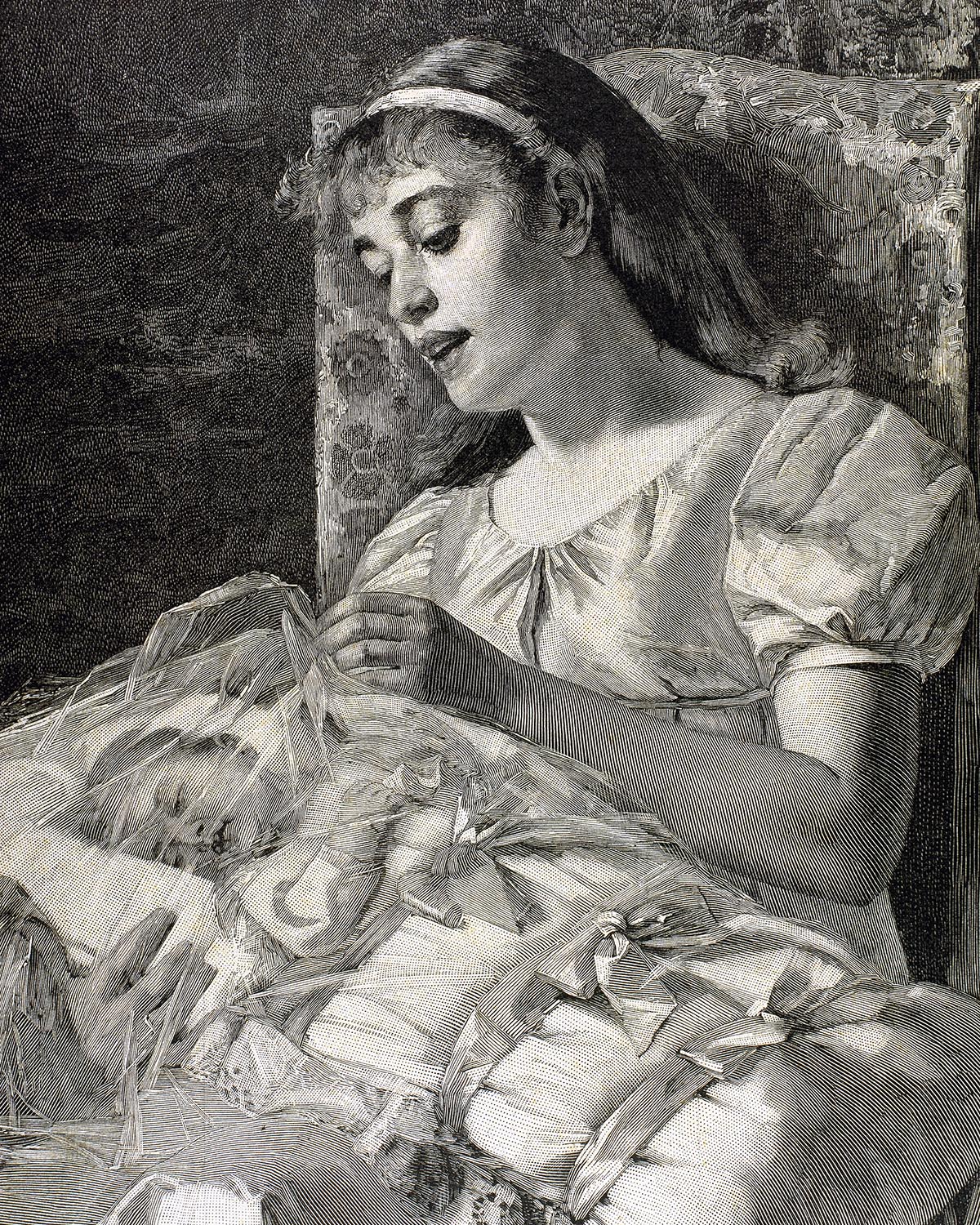
Was the child physically unlike its father? Resemblance can be discerned from photos, portraits or even descriptions in surviving letters. Prince Albert was reported to have looked nothing like his father or brother. This one is strengthened further if the child looks like the rumoured ‘real’ father. But, of course, a lot of children don’t look like their biological fathers.
Was the mother a known adulteress? If your ancestors were ‘well-to-do’, then affairs can be uncovered in divorce records, as adultery was the only grounds for divorce until 1937. Divorce became possible without an Act of Parliament after 1857.
In my own family, a distant cousin, Colonel Richard Broadhurst Dutton, divorced his wife Ada Waller, who was (scandalously!) a vicar’s daughter, in 1915. She’d been having an affair with a solicitor for at least 10 years. I uncovered this through The National Archives (TNA) website and old newspapers.
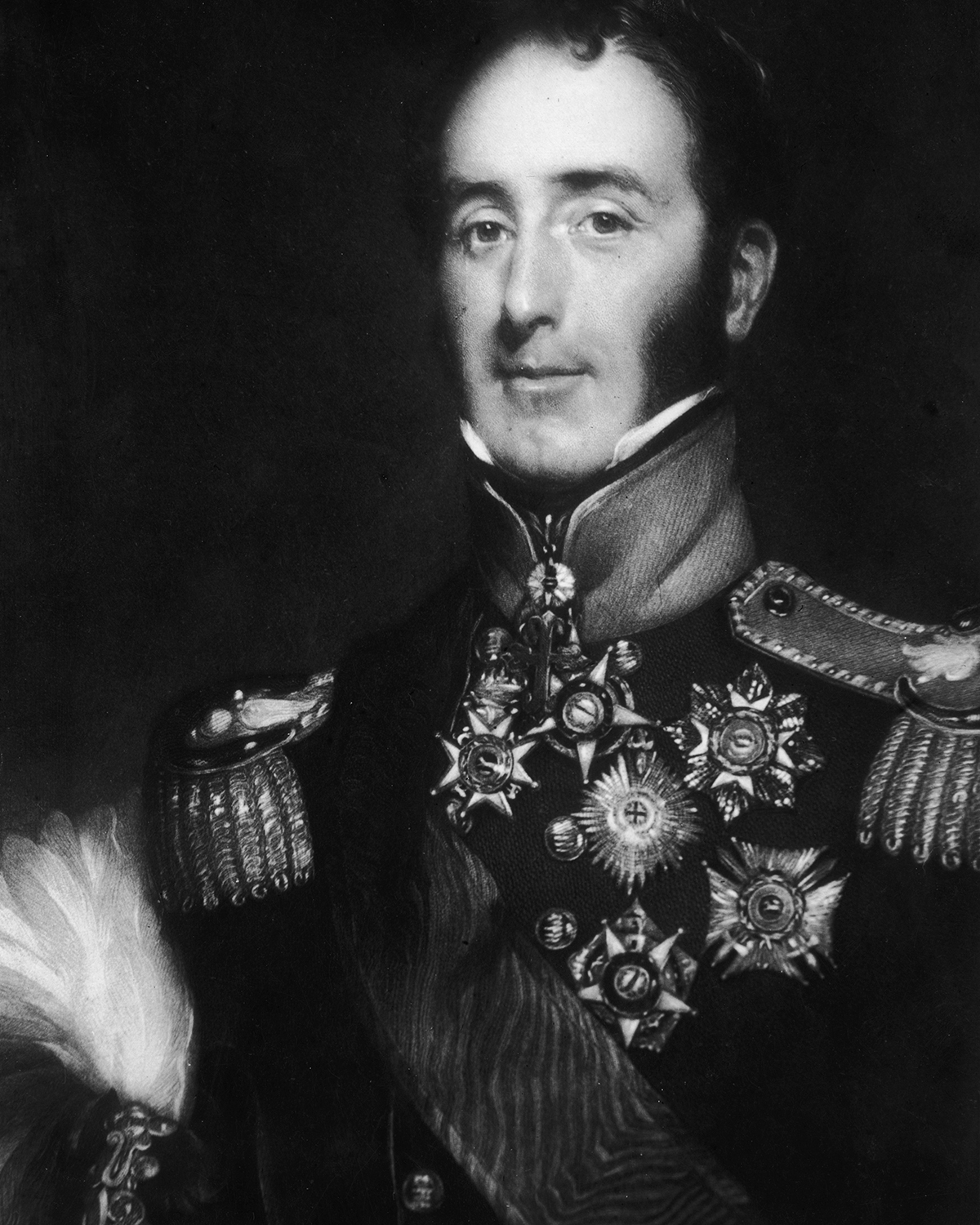
Prince Albert’s mother was apparently having an affair with Baron von Mayern before his birth, and his parents divorced. Victoria’s mother was seemingly sleeping with courtier Sir John Conroy. In fact, in later life the Queen said she had witnessed ‘some familiarities’ between Sir John and her mother.
Divorce was expensive and shameful, so rather than divorcing, a couple might merely become estranged. Even this would imply a breakdown so extreme that they were prepared to weather a degree of social disgrace. Adultery would be a candidate reason. If the parents were living apart, this would be revealed by census records or by the 1939 Register. If the breakdown happened before the liberalisation of divorce laws in 1923, you may find that one or both parties bigamously remarried. Doing this was so socially accepted among the working class that bigamists were often not prosecuted and if they were, the punishments were trivial.
If the breakdown happened later then it might be revealed in a will, or an administration – where there is no will left behind. My great grandfather stockbroker Richard Henry Dutton’s administration in 1958 stated that all his estate should have gone to his wife Rose. However, she was ‘estranged’ from him and had died without having claimed the money.
Sometimes suspicions arise if family relationships seem ‘lop-sided’. According to William Hamilton in The Genetical Evolution of Social Behavior (1964), we are attracted to people who are genetically similar to us (though not too closely related) because that way we pass on more of our genes and avoid genetic disorders – apparently, the sweet spot is third cousins!
Couples are more genetically similar to each other than two random people from the same population. We get 50 per cent of our genes from each parent, but we will always be more similar to one parent than the other and are likely to be closer to that parent. So, in a case of paternity fraud, even if unknown, we would expect the child to not be especially close to the father compared to the other siblings. This might well be recollected by elderly relatives or in surviving letters. At the same time, the ‘real’ father may have consciously or unconsciously taken a great interest in the child.
This might be seen in paying for his education or bequeathing to him (but not to the other siblings) in a will. Sir John Conroy is reported to have taken an intense interest in the well-being of the young Victoria.
Perhaps there were reasons to have an affair. Did your ancestor go bankrupt or lose his job? In cases where a woman married a man for his social status, affairs will be more likely if the husband substantially loses status, making him much less attractive. They will also be more likely if the woman is mistreated or neglected by her husband. She will therefore lack an emotional connection with him and may seek this elsewhere. Prince Albert’s mother married a man 16 years older than her. He didn’t love her, marrying her after having failed to win the hand of a Russian princess. Victoria’s mother married a man 20 years her senior who kept a variety of mistresses.
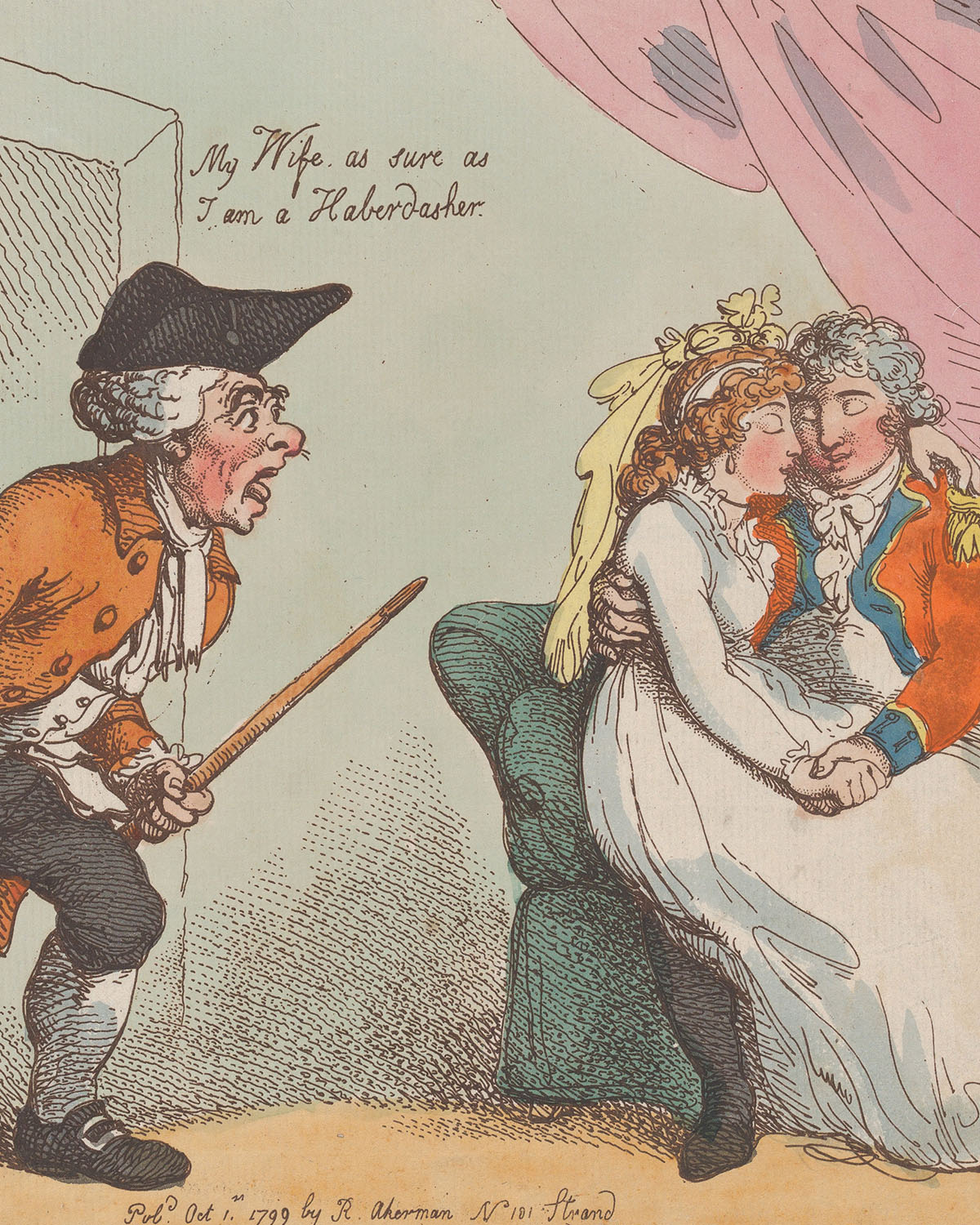
The First World War saw a rise in affairs and there was a spike in divorce at the end of it. In addition, if the husband was infertile – perhaps due to trauma or injury in the war – then, desperate for children, the wife might become pregnant by another man.
Tales of false paternity abound concerning royal dynasties. One such story suggests that King Haakon VII of Norway was infertile. His wife, the English Princess Maud, Edward VII’s daughter, is said to have been artificially impregnated by her doctor’s son in London in 1902. King Haakon, away at sea at the time of conception, could not have been the father of King Olav V, the current king’s father. Whether this is true or not remains to be proved.
Low social status can have a bearing on whether a child was fathered by a man other than a woman’s husband. Paternity fraud is more common the further down the social scale you go. A 2019 study by KU Leuven university used DNA testing to compare the DNA of 513 pairs of men from Belgium and the Netherlands who shared a common ancestor. They found that the average rate of what they termed extra-pair paternity was around 1%, but it rose to as high as 4% among lower-class labourers and weavers and 6% for lower socioeconomic classes in densely populated cities.
How can you prove paternity fraud?
With your suspicions aroused, you may sometimes be able to absolutely prove paternity fraud by joining a one-name study project. Visit the Guild of One-Name Studies website to see if the surname you are researching is registered.
These ‘clans’ have been established for many British surnames. Members can not only pool their genealogical resources, but can also take a DNA test with a specialist company to see if they are genuinely related.
Y-DNA is passed on, completely intact, from father to son, so if you find that you (or a male-line male relative) don’t have the same Y chromosome markers as the other members of the group with the same supposed ancestors (and surname), then there could very well be a case of paternity fraud.
For more information and to find companies offering the Y-chromosome DNA test, contact the International Society of Genetic Genealogy.
The unearthing of Richard III, and attempts to prove the authenticity of his skeleton, led to five male-line descendants of the 5th Duke of Beaufort giving DNA samples. Beaufort was supposedly descended from Richard’s ancestor Edward III in the male line, so they would share Richard’s Y chromosome. None of the five men shared Richard’s Y chromosome and one of them wasn’t even related to the other four.
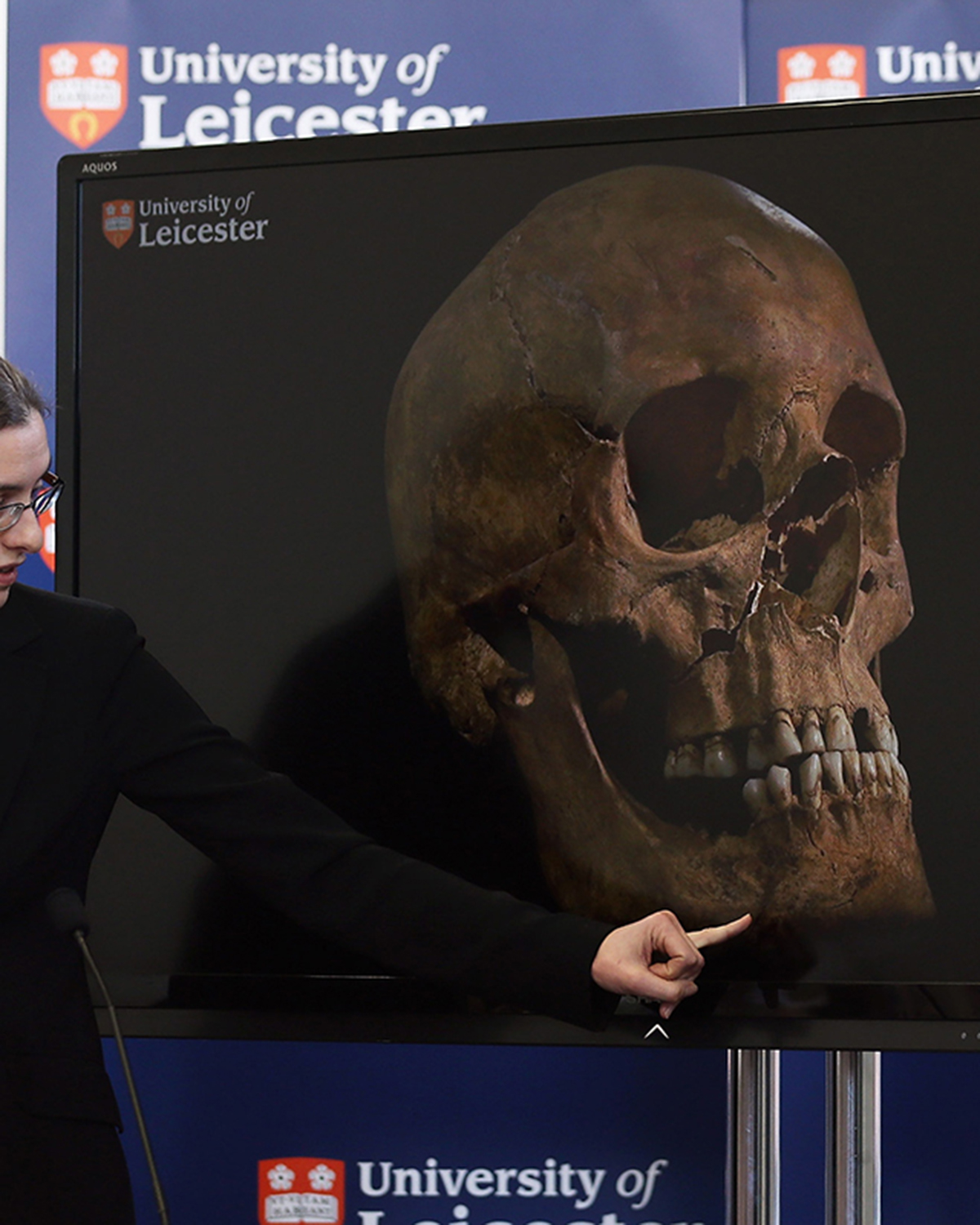
If a female ancestor allegedly had an affair with her husband’s brother then this would be very difficult to confirm. On average, cousins share 12.5 per cent more DNA than two random people do. However, current technology cannot even reliably distinguish cousins from the general population, let alone second cousins. You could, though it’s unlikely, share 12.5 per cent of your DNA with a stranger, just by chance.
But, of course, if you do find that your Y chromosome differs from other members of the group it might not necessarily prove your suspicions. You may have an illegitimate ancestor from the 18th century onwards who took his mother’s surname.
Before this period, they would have been more likely to take their father’s surname, as illegitimacy was more socially acceptable. Also, surnames were not completely fixed until around the late-17th century. A baker might be known as ‘John Turner alias Baker’ and ‘Baker’ might ultimately be the surname that was fixed.
So, it’s important to trace your tree back as far as possible – to rule these anomalies out – before investing in a DNA test.
If you find an individual on your tree who is surrounded by many of the inconsistencies mentioned, paternity fraud may be the simplest way of making sense of all the different lines of evidence.
A word of warning though – discovering paternity fraud in the family in recent history can, of course, lead to heartache and cause people to reconsider their true sense of family identity.
