A quote attributed to Captain Mansfield Smith-Cumming, first Chief of the Secret Intelligence Service (SIS) (now more commonly referred to as MI6), states “The essence of Secret Service is… Secret”.
From the earliest days spies have been sent to collect information for their masters. Sir Francis Walsingham created a network of spies and informers to protect Queen Elizabeth I. The French Revolution caused an influx of refugees, some possibly French spies, and the Aliens Office was created to monitor them. French Revolutionaries and Napoleon had many enemies. British agents based on Jersey gave money and weapons to dissenting Frenchmen, rescued captives from the Bastille and spied on the French fleet. By the Crimean War of 1854 there was no secret service (one had to be created), the same occurring again in the Boer War (1899–1902). Serious talks about intelligence lead to the creation of MI5 and MI6 in October 1909.
MI5: The security service
MI5 was created to trace suspected German spies. It was headed by Captain Vernon Kell, a rather sickly officer, who spoke several languages fluently and chose his subordinates well. He acquired a retired army clerk, two secret agents from the War Office, Major Reginald Drake, a brilliant spy catcher, Captain Eric Holt-Wilson DSO, a Royal Engineer and administrator, three Post Office Special Investigators who could open letters secretly and break codes, and Captain Maldwyn Haldane who supervised the growing clerical staff. They were the core of the organisation through most of the First World War.
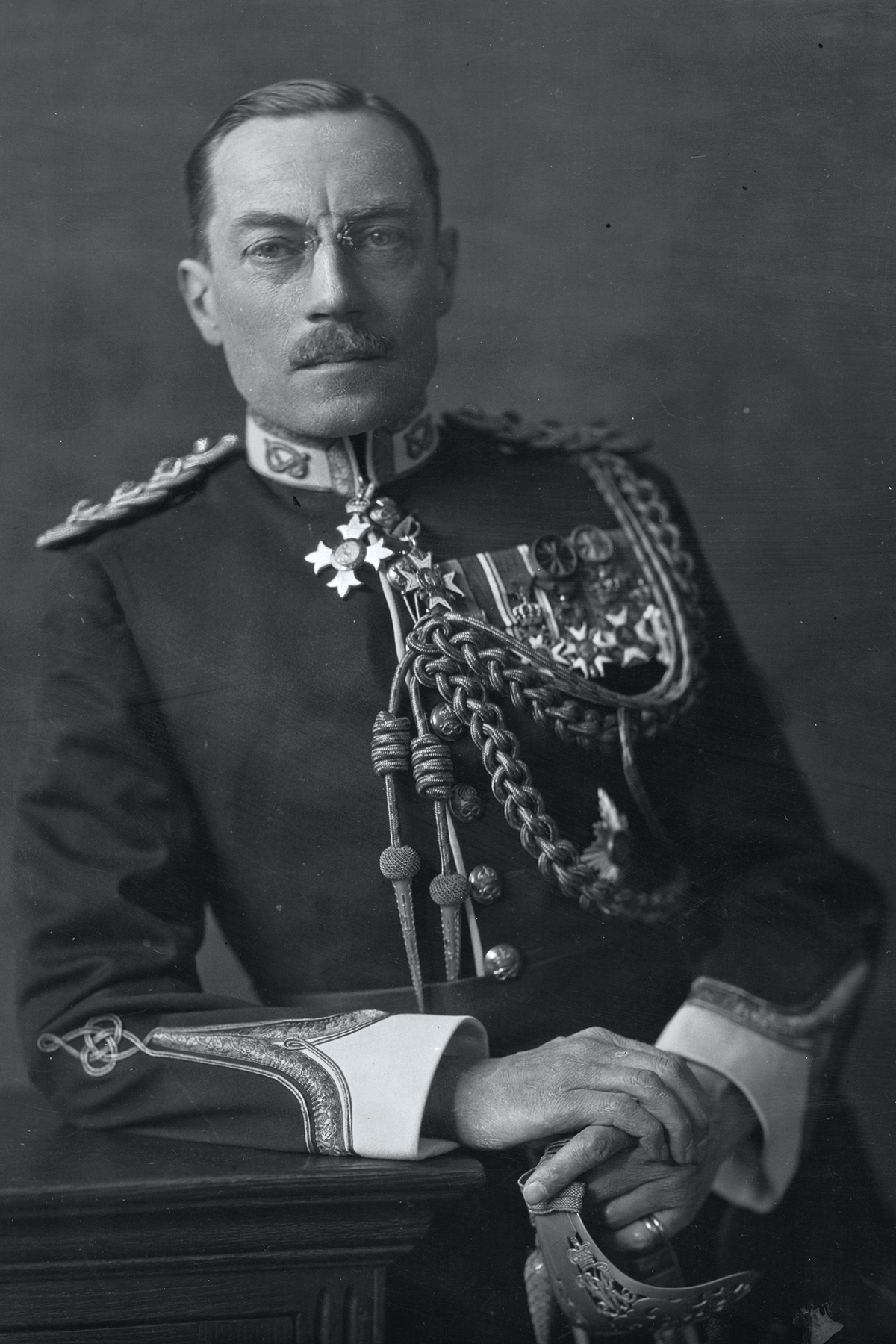
On the outbreak of war, more officers (mainly retired or wounded) joined MI5, and female typists and clerks were recruited to assist. By 1918 MI5 had six branches (Alien Control, Imperial Overseas Intelligence, Investigation of Espionage, Control of Ports and Frontiers, Prevention of Espionage and Administration) and more than 800 staff. Using information from the police, censorship, agents at home and abroad (especially SIS in Holland) they arrested scores of suspects.
The Security Service began releasing its records to the public in the 1990s and continues to do so, the latest release being in January 2025. Many files on individuals are in the KV2 series (including files on Anthony Blunt, Lenin, Stalin and Oswald Mosley, plus minor suspects such as Jacob Bronowski who presented the BBC’s The Ascent of Man in 1973). All the KV 2 files can be found via The National Archives (TNA)’s website and downloaded free. Over 4,000 files are catalogued, but many individuals have more than one file. Please note: the released files are only a tiny fraction of MI5’s records.
Finding MI5 staff
For WW1 there’s a complete list of staff, organised chronologically covering WW1 in KV 1/59, which is also free to download. Army Officers’ details include rank and regiment and further details can be found in the WO 339 or WO 374 series at TNA. These aren’t digitised, so a visit to TNA will be required.
Tracing female staff can be harder, though having two, or three initials, is helpful. Mrs J H M Roe is certainly Joan Hilda Marian Roe and investigation shows that, pre-marriage, she was J H M Wiseman and her brother was an SIS Officer. Other clues might be a father who was an army officer (the senior the better), a cleric or a politician. A few less-privileged women did succeed and were generally held to be the best of all.
File KV 4/157 contains some staff lists between 1920 and 1939, including the final released list compiled in December 1939. You could try going through scores of post-1939 files for later staff, but it’s probably easier if you contact MI5 yourself.
You can write to MI5 if you believe a deceased relative used to work there (for safety reasons, they won’t confirm anything if they’re still alive). Send their details (ideally full name and date of birth) and what you’d like to know to The Enquiries Team, PO Box 3255, London SW1P 1AE, and they’ll look into what, if any, information can be released. Don’t expect a lot of detail, but there should be something you can follow up with your own research.
Secret agents abroad
SIS/MI6 was created at the same time as MI5, specifically to obtain intelligence from abroad – particularly, at the time, from Germany, whose modern fleet was designed to challenge the Royal Navy. Working abroad required courage, arrest was always a danger and more than one ‘gung ho’ young man was detained. Secret agents who worked for money, or were traitors, were frequently shot. SIS’ first Chief “C” was Commander Mansfield Smith Cumming RN, an expert on motor cars, motor boats and engines and a qualified pilot. Since his main target was the German navy he appears to have been just the man – except that he couldn’t speak German.
Cumming sent spies into German and Austrian shipyards, recruited agents in France and Belgium and liaised closely with French intelligence. Despite a car crash in which his son died and Cumming lost a leg, he continued to develop spy networks behind enemy lines, reporting troop train movements. He extended SIS intelligence gathering by establishing Passport Control Offices (PCO) in neutral countries where information could be obtained. By the end of the war, there were PCOs in virtually every European country and as far away as Argentina and Japan. Cumming died suddenly in 1922. After the Revolution, Russia became the prime SIS target until the rise of Nazism in the 1930s.
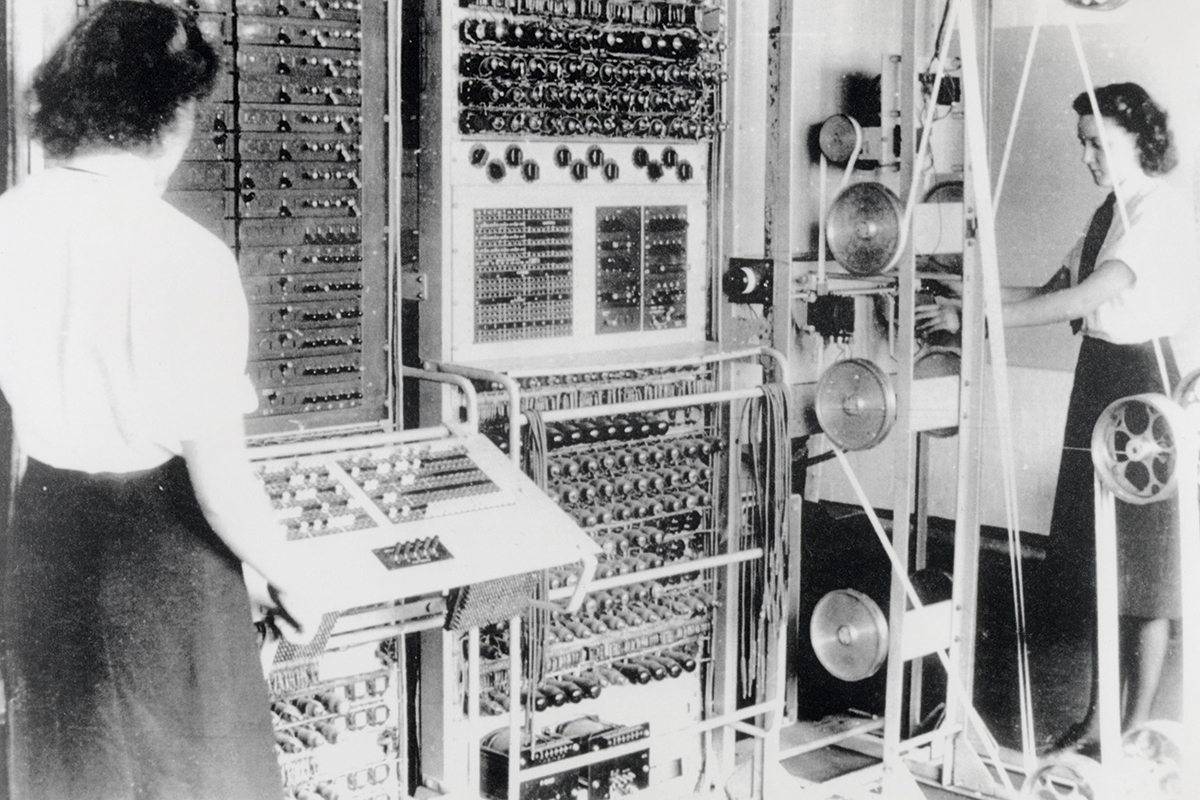
SIS also took over the handling of wireless and telegram interception and codebreaking, first from Broadway Buildings in London, later transferred to Bletchley near Bedford. Post WW2, it became Government Communications Headquarters and moved, as a separate organisation, to Cheltenham.
Finding SIS and Bletchley ancestors
Bletchley Park records are in TNA’s HW series, usually indexed, but not digitised. There’s also The Bletchley Roll of Honour, which is searchable. New names are added to the database regularly.
SIS never deliberately releases names of staff. But others do – albeit accidentally. Files for the Inter Services Liaison Department (ISLD), an SIS cover name often gives names. Passport Control Office staff for the early 1920s are named in FO 366 files. File FO 372/1281 names many early SIS officers. RNVR records for WW1 service may say “NID for service outside the Admiralty”, which means SIS service. SIS section D names are listed, with biographies, in Malcolm Atkin’s book Section D for Destruction.