

Every historic building has its own story, but as family historians, we know the most fascinating histories are often those of the ordinary people who lived, worked and worshipped there. Their names may never have appeared in the history books, yet their lives shaped the places we still visit today. Through the abundance of historical records available on Findmypast, many of these forgotten lives can still be uncovered today, connecting family histories to some of England’s most remarkable places.
From 11 – 20 September, Heritage Open Days are hosting celebrations under the theme Everyday Histories, opening the doors to thousands of remarkable sites across England, including Ironbridge in Shropshire, the People's History Museum in Manchester, Norwich Cathedral and Grainger Market in Newcastle. Far more than simply fascinating places to explore, they’re reminders that history happened because of people like our own ancestors.
Trace the people behind England's historic places with Findmypast.
Step inside England's Everyday Histories

Heritage Open Days offers the chance to experience England’s historic places first-hand. The buildings provide the setting, but the records reveal the workers, families and communities that gave them purpose.
That same sense of discovery runs through each of the featured sites. Whether stepping inside buildings usually closed to the public or exploring familiar landmarks in a new light, the same questions naturally arise: who built these places, who worked here and who passed through them every day?
This year’s locations include:
- People’s History Museum, Manchester
- National Trust Killerton, Devon
- Guards Museum, London
- Pippbrook House, Surrey
- Norwich Cathedral, Norwich
- National Trust Quebec House, Kent
- National Trust Ironbridge, Shropshire
- Grainger Market, Newcastle
It is through historical records that many of those questions begin to be answered.
Birth, marriage and death records found on Findmypast map family relationships across generations, while military collections – including those linked to the Guards Museum – trace service histories, regiments and pension records. Parish registers, such as those connected with Norwich Cathedral, often reveal continuity within local communities over centuries.
Other collections bring entire places into focus: the industrial workforce of Ironbridge Gorge, the traders and market communities of Grainger Market, and the domestic service and estate households associated with Killerton House in Devon all appear within the records, reflecting the breadth of ordinary working lives across the country.
In the newspapers – drawn from the British Library’s archive in partnership with Findmypast – those individuals are most vividly brought to life. Official records gain context through reports of labour disputes, apprenticeship notices, trade advertisements and personal announcements that illuminate everyday experience.
History through ordinary lives

One of the most compelling examples comes from the latest series of Findmypast’s podcast A Family History Of..., hosted by family historian Jen Baldwin. An episode linked to Ironbridge explores the forgotten women of the Industrial Revolution, showing how the lives of workers often absent from traditional accounts can still be traced through surviving records.
It is a reminder that Britain’s industrial story was not shaped solely by famous inventors or factory owners. Women worked in workshops, supported households dependent on industrial employment and played vital roles within their communities. Traces of their lives survive in census returns, civil registration records and local newspapers.
Another episode focuses on Manchester’s People’s History Museum and the Peterloo Massacre, following the lives of ordinary people caught up in a defining moment in Britain’s struggle for political reform.
Listen to the latest episode of A Family History Of… now.
Where will the records take you?
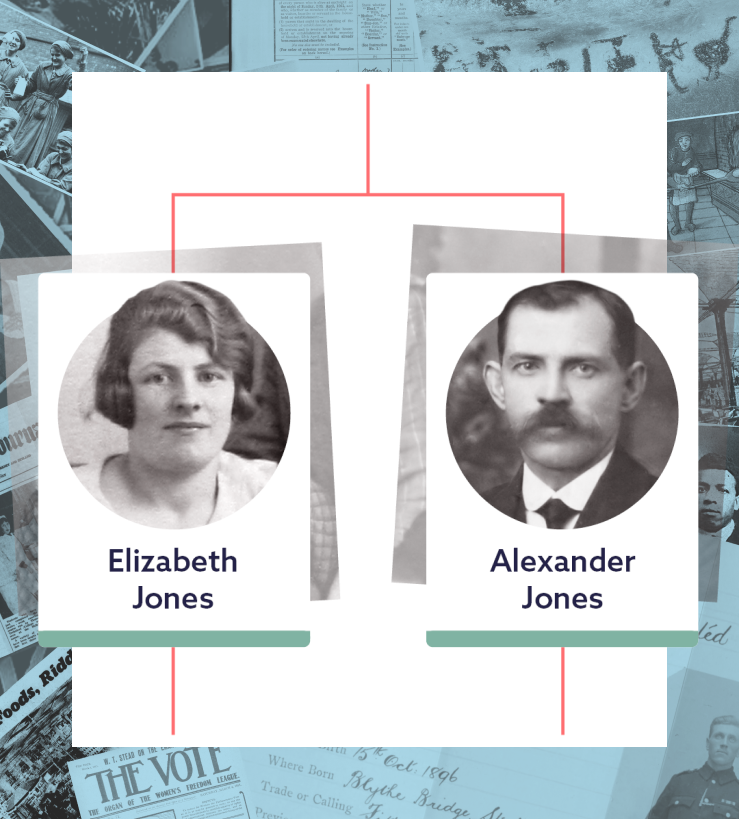
Findmypast’s collections allow researchers to follow individual lives in greater depth and across more sources than ever before.
For those inspired by Heritage Open Days, whether at Ironbridge, the People's History Museum or any of this year’s featured sites, the same records offer a starting point for exploring family connections of their own.
After all, the people behind this year’s Everyday Histories theme were not defined by fame, but by the everyday details that were carefully recorded and preserved.
Their stories survive in the archives – and the next discovery could already be waiting in your own family tree.
Find out more about Heritage Open Days and discover your own Everyday Histories with Findmypast.