There are around 7,000 islands in the Caribbean, and much of their history has been shaped by centuries of competing colonial powers. Some are now independent nations – among them Cuba, the Dominican Republic and Jamaica – while others remain British, Dutch, French or American territories. An ancestor’s records might therefore be found at The National Archives in Kew, in The Hague, Copenhagen or Washington, as well as on the relevant island itself – written in English, Portuguese, Spanish, Dutch or French.
For most readers with British-Caribbean ancestry, the trail begins with the records of empire and slavery. And these websites are some of the best places to start, whichever island your family came from.
You may also like:
- Check out our guide to Jamaican family history records
- See our new guide to tracing Barbados ancestors
- 100 cool British last names: From Anguish to Wildblood
- How to start a family tree
1. FamilySearch

FamilySearch has several Caribbean-wide datasets covering births and baptisms (1590–1928), marriages (1591–1905) and deaths and burials (1790–1906), along with several island-specific sets. These include Jamaican civil registration, 1878–1999, comprising millions of birth, marriage and death records; Bahamas civil registration from the mid-19th to mid-20th century; and transcribed Barbados church records back to 1637. Many of these come with images of the original documents – some free to view from home, while others can only be seen at FamilySearch Centres or affiliate libraries. Meanwhile, this Caribbean wiki page has island-by-island links describing the kinds of records that survive and where they can be found
2. Legacies of British Slavery

This free database is a near-complete census of British slave-ownership at the point of abolition in 1833, compiled at University College London from the Slave Compensation Commission records. It names more than 40,000 owners across the British Caribbean, Mauritius and the Cape, and a second phase has traced some 4,000 estates back to 1763. You can search by owner, estate, firm or address, and geo-referenced maps pinpoint plantations in Jamaica, Barbados and Grenada. It records the owners rather than the enslaved, but for descendants of enslaved people, it is still one of the quickest ways to identify an estate and offers a route to find out more.
3. Digital Library of the Caribbean
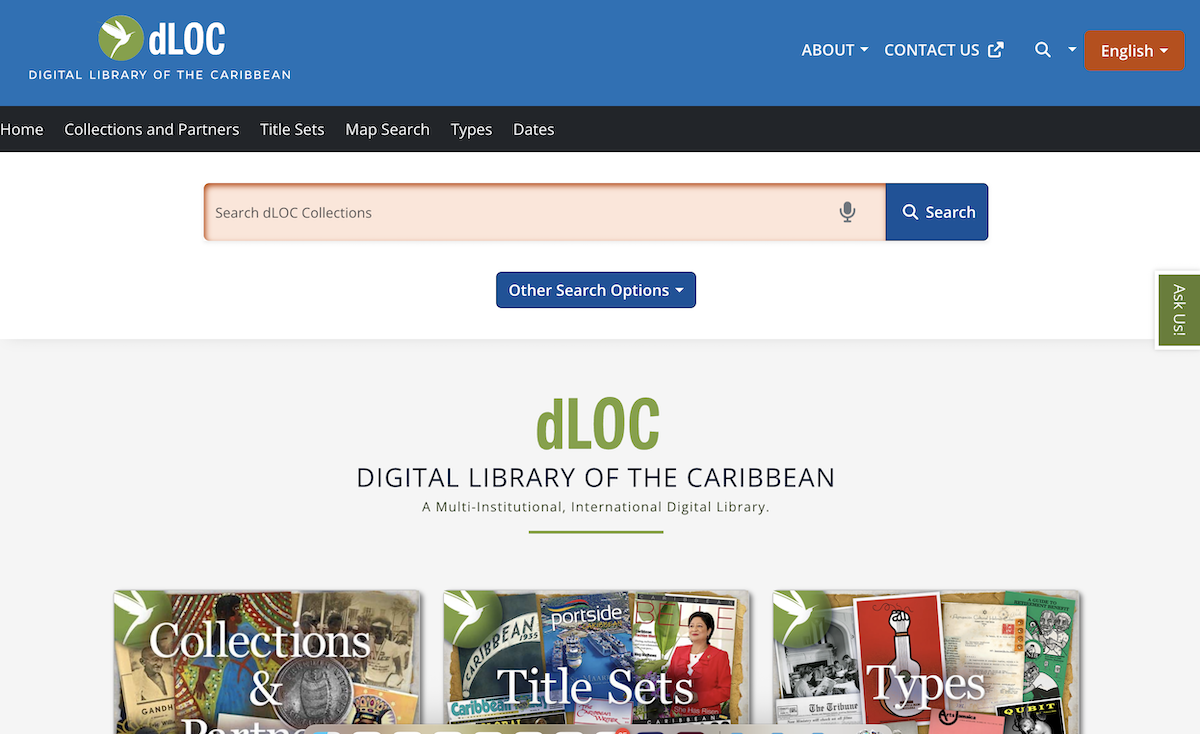
This free cooperative of libraries and archives has put more than four million pages online, drawn from partners including the National Library of Jamaica, the University of the Bahamas and the National Archives of Haiti. Don’t expect some name-indexed database of genealogical sources – this is more of an expanding browsable library of newspapers spanning three centuries, official government gazettes, maps and photographs, plus archives of colonial administrations. The gazettes and newspapers often carry appointments, legal notices and family announcements. This site is a great source of archival, heritage and cultural bodies across the region.
4. Ancestry
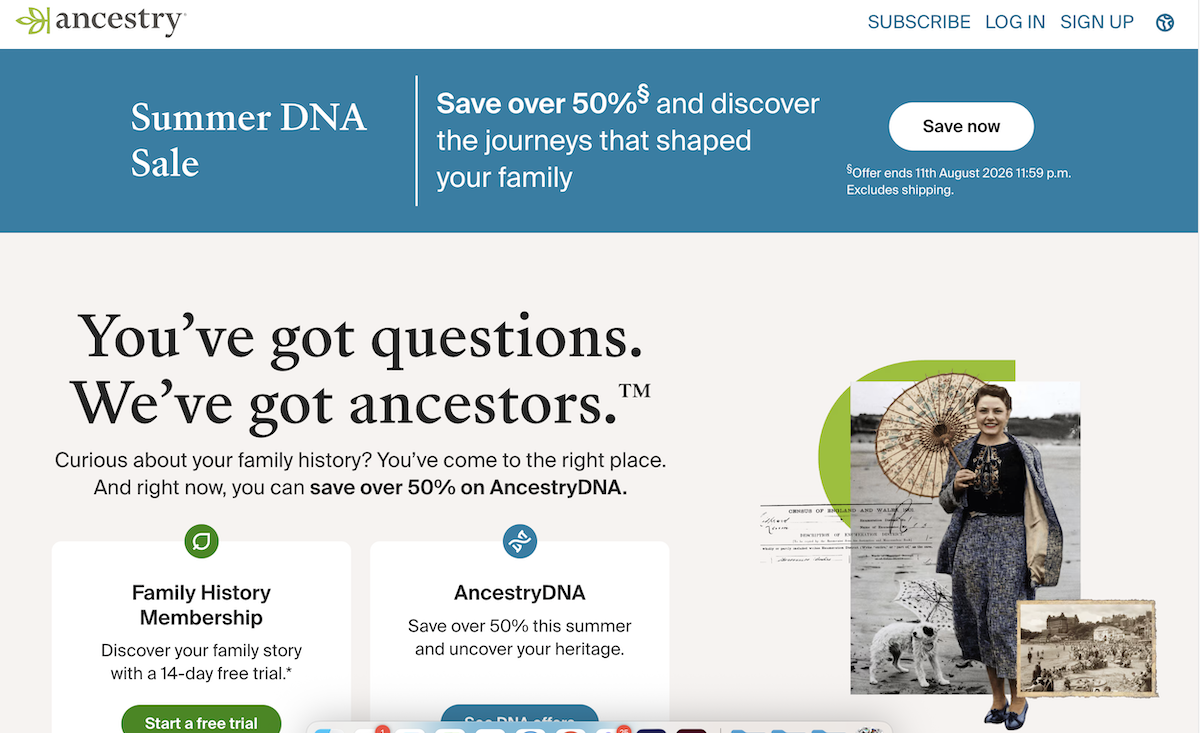
Ancestry’s core British-Caribbean material, much of it digitised from The National Archives, includes incoming passenger lists for 1878 to 1960 (also available on Findmypast), which cover Empire Windrush-era arrivals. Other sources comprise English settlers in Barbados from 1637 to 1800, drawn from Barbados church records (baptisms and marriages), and probate records containing references to around 200,000 individuals. Former British Colonial Dependencies Slave Registers (1813–34) are currently free to view. Ancestry has lots of material accessible via FamilySearch, such as Church of England Parish Register Transcripts for Jamaica (1664–1879)
5. Slave Voyages
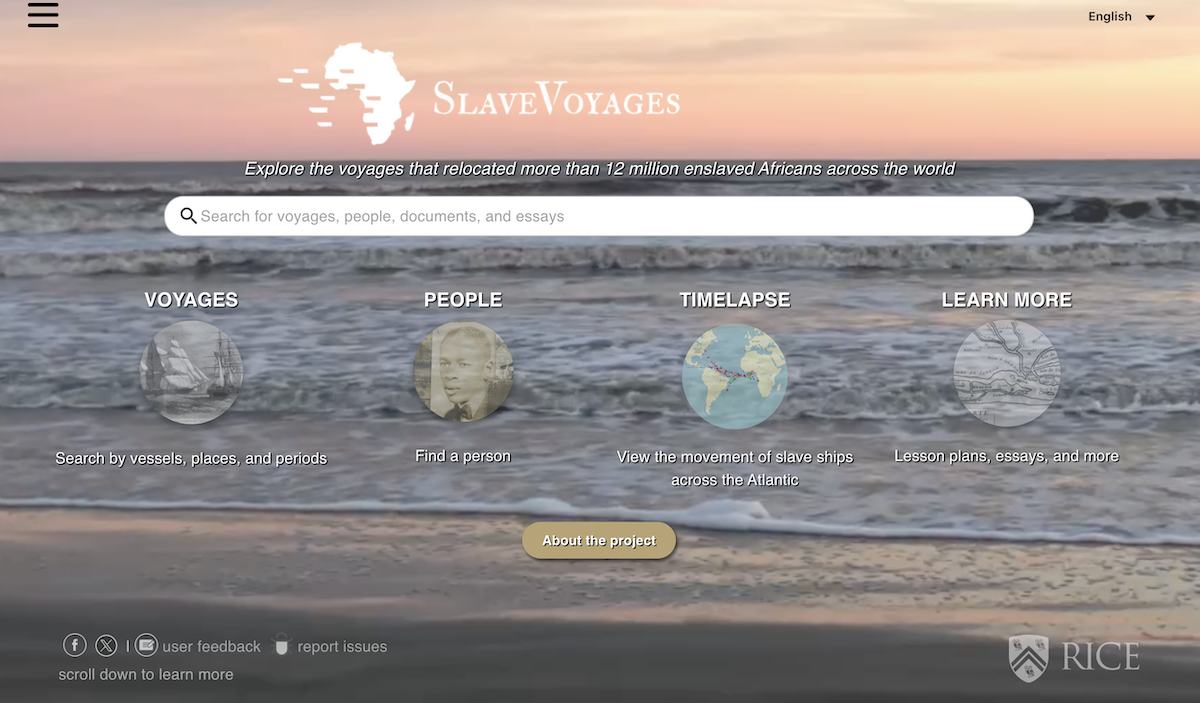
Of the estimated 12.5 million enslaved Africans forced onto ships during the transatlantic slave trade, approximately 4.7 million were brought directly to the Caribbean islands to work on sugar plantations. This database documents more than 36,000 transatlantic voyages between 1514 and 1866, with a further 11,000 in the intra-American trade, detailing the ships, their owners and captains, plus the numbers of slaves carried and lost. The People Database section has records of about 91,000 Africans freed from captured slave ships, searchable by name and origin. There are two separate portals for researching enslaved people and their enslavers.
6. Expert's Choice: The National Archives
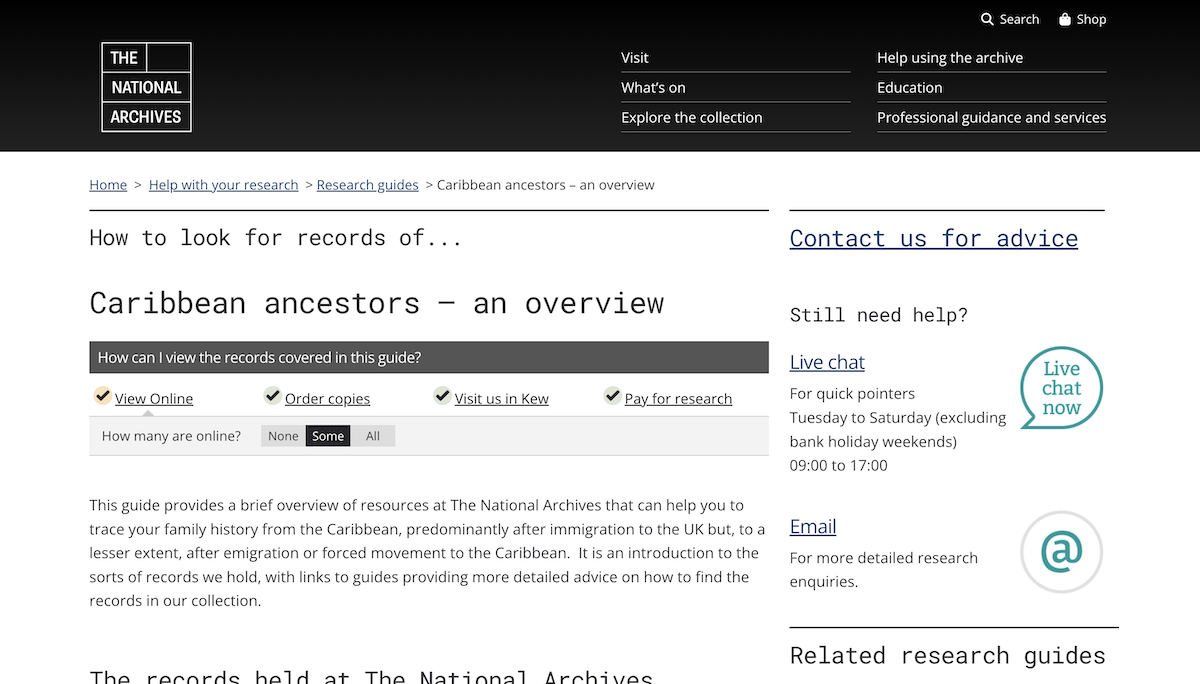
Chosen by Stephen D. Porter, senior researcher for The Caribbean Family History Group:
"The National Archives at Kew holds the records of UK central government, which makes it the essential starting point for the British end of a Caribbean family story, even though it rarely holds the local parish registers and land records that remained in the islands. Two free research guides map the ground. ‘Caribbean ancestors – an overview’ introduces the main record types, weighted towards arrival in Britain but reaching back to emigration and forced movement to the Caribbean, with links onward to more detailed guides. ‘Caribbean social and cultural history’ is the better route into the records created as government dealt with Caribbean communities between 1919 and 2000, covering employment, housing, policing and race relations. It explains how to search the catalogue using departmental codes such as CO for the Colonial Office.
"The holdings are considerable. The slave registers of 1813 to 1834 (series T 71), naming enslaved people by owner, colony and often parish, are digitised and free to view through Ancestry, covering Jamaica, Barbados, the Bahamas, Antigua and more. Related records include the Slave Compensation Commission records, documenting the owners who claimed payment at abolition. Colonial Office correspondence holds census-type lists naming heads of household, while incoming passenger lists confirm arrivals, among them the Empire Windrush at Tilbury in June 1948 (BT 26/237). Earlier still, the Colonial State Papers from 1573 are searchable online by subscription. Much of the rest must be read at Kew, but the guides show what exists before you travel."
Caribbean ancestors: More websites
7. Bahamas Department of Archives
Here you can find out about census, slave and church records, compensation returns, registers of freed slaves, wills and jury lists for the Bahamas. There are equivalent institutions all over the Caribbean, including Jamaica and Trinidad and Tobago.
8. British Newspaper Archive
The archive has a growing collection of Caribbean titles among its millions of pages, including the Trinidad Chronicle, the Barbados Mercury and the Colonial Standard and Jamaica Dispatch.
9. Caribbean Family History Group
A Midlands-based group founded in 2008 to help people trace ancestry across the Caribbean. The website has guidance and links, and operates a FamilySearch affiliate library in Solihull.
10. Caribbean Genealogy Library
Based in St Thomas, US Virgin Islands, this library has passenger lists, funeral booklets and the Maria Smith database of island deaths and cemeteries.
11. Curaçao Slave Register
The Dutch national archives’ free register of those enslaved on Curaçao (1839–1863), with the 1863 emancipation registers that record the surnames freed people took.
12. Jamaica Gleaner Archive
A leading newspaper since 1834, the subscription-based archive has more than 970,000 digitised pages, rich in birth, marriage and death notices.
13. Jamaican Family Search
An online library of Jamaican records from the 17th century to 1920, including directories, church and civil registration extracts.