
You open the census records expecting to find your ancestor as a child, tucked safely between their parents and siblings. Instead, your eye catches something you weren’t prepared for. Your six-year-old relative is living with complete strangers. Not an aunt. Not grandparents. No obvious family at all. And beside their name is a puzzling description: “nurse child”.
What happened? Was this an occupation? Had their parents died? Were they adopted? Or was something else entirely going on?
As is the danger of genealogical research, I told myself I’d spend an evening looking into this new mystery. That evening turned into weeks. Weeks became months. Before long, that one puzzling census entry had grown into an MSc dissertation and the analysis of more than 230,000 census records.
A single word in the census can hint at a hidden story. Yet those labels rarely mean what we assume they do. Behind them lies a complex world of poverty, illness, informal care, family crisis and changing ideas about childhood that is often invisible at first glance.
That was exactly the mystery I stumbled across while researching my local history. I wasn’t expecting to uncover a forgotten chapter of childhood history, I was simply trying to understand why one child wasn’t living with his parents. Instead, I found the unfamiliar description “nurse child”, and with it, a question that seemed surprisingly difficult to answer. I assumed somebody must have solved the mystery already. Surely there would be a chapter in a genealogy handbook or a neat explanation in a history book. Instead, I found disagreement, uncertainty and silence. The deeper I looked, the more elusive the answer became which only fed my curiosity further.
For such a mysterious term, I soon realised this was far from an isolated case. The further I searched, the more children I found. One became dozens. Dozens became hundreds, then thousands. Soon I realised I wasn’t looking at isolated stories but a hidden population stretching across England. Across the censuses between 1851 and 1921, children were recorded living away from their parental homes under a variety of labels. The most common were: “nurse child”, “fostered”, “boarded-out”, “orphan”, “waif”, “adopted”, “nursling”, “poor law” and “foundling”. Every census seemed to raise another question. Just as I thought I understood one label, another appeared. Were they simply different names for the same circumstances, or did each reveal a very different childhood experience?
That mystery became the foundation of my MSc dissertation, through which I set out to discover who these children were and why they were living away from their parental homes. What I discovered challenged many of the assumptions family historians make when interpreting these census entries.
They were never the exception. They were part of everyday Victorian and Edwardian life. Behind every statistic was a family struggling against poverty, illness, dangerous work, bereavement, migration, workhouse intervention or other crises that forced difficult decisions about a child’s care.
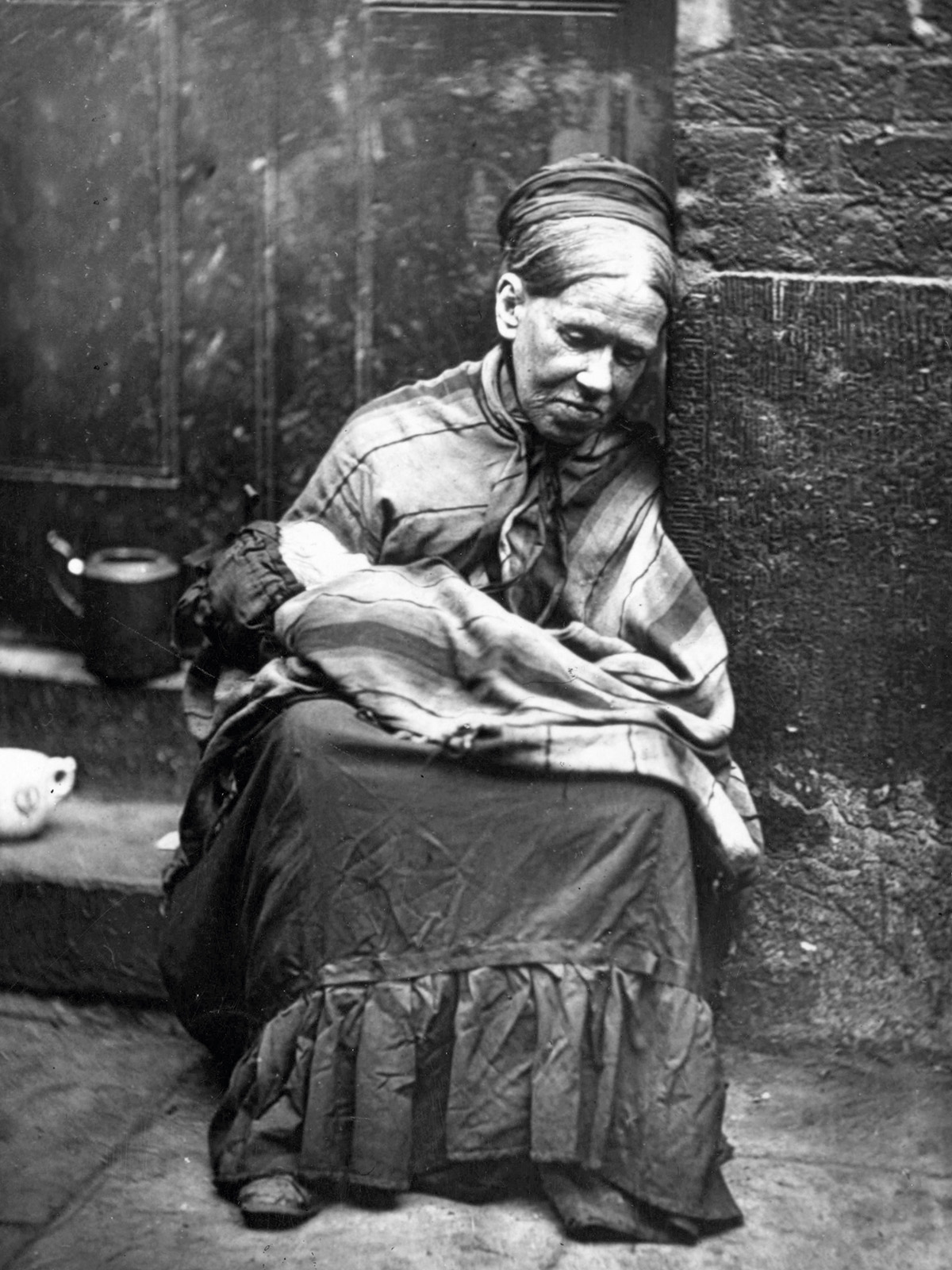
At first glance, it seems perfectly straightforward. We instinctively picture a child becoming a permanent member of a new family through a formal legal process. But there was one problem with that assumption. In England and Wales, legal adoption did not exist until 1926.
So why was the census recording adopted children decades earlier?
The more census records I examined, the stranger the circumstances around the word “adopted” became. It appeared again and again, in every census from 1851 onwards, becoming increasingly common as the decades passed; long before the Adoption of Children Act 1926.
The answer wasn’t that the census was wrong. It was that Victorian families understood the word very differently. To them, an “adopted” child was often one who had been taken into another household as part of the family, regardless of whether any legal process existed. The census recorded relationships as people understood them, not as the law defined them.
For family historians, that distinction is crucial. Once you understand what Victorian families meant by the word, the search changes completely. Instead of hunting for a legal adoption that never existed, you begin looking for the family circumstances that led that child into a new home.
The same realisation transformed my understanding of another familiar word: “orphan”. This time, the discovery was even more surprising.
Most of us assume an orphan is a child who has lost both parents – as the dictionary defines it. Yet the more children I traced beyond the census, the more that assumption began to unravel. Again and again, children described as “orphans” still had a living mother or father. By the end of my research, more than a third of the cases I examined fell into this category.
Had the census made a mistake?
Not necessarily. By the late 19th century, “orphan” had become more than a literal description; it had evolved into a widely understood label. Social reformers such as Dr Thomas John Barnardo readily adopted the term, using it to evoke sympathy and encourage financial support, even when at least one parent was still alive. As that language became embedded in public understanding, it also found its way into the census. Rather than applying a strict dictionary definition, enumerators were often recording the way families and communities themselves understood the word.
For family historians, that changes everything. The word “orphan” should never be treated as the end of the story. Instead, it should prompt us to ask a more important question: not who had died, but why the child was living apart from their parents. Rather than limiting our search to death records, we should widen it to consider illness, poverty, institutional care, family breakdown or any circumstance that might have separated a child from their parents.
Perhaps the greatest mystery surrounded the term “nurse child”. It was, after all, the very phrase that had first captured my attention. To modern ears, it sounds reassuring, as though the child was simply receiving professional care. The historical reality was far more complex.
As I worked through more than 230,000 census records, I soon realised my first “nurse child” was anything but unusual. The term appeared thousands of times across the censuses, becoming increasingly common as the 19th century progressed.
So, who were they?
In many cases, a nurse child was an infant living away from home with a wet nurse or another woman who had been paid to care for them. For Victorian families, this was often a practical and respectable solution. A mother might have died in childbirth, become seriously ill, needed to return to work, or simply been unable to breastfeed. At a time when maternity leave was not an option and there were very few formal childcare options, placing a baby with another woman could be an act of necessity rather than abandonment.
Then, another pattern began to emerge. In most cases, these children had not travelled far. Time and again, I found nurse children living only a few streets or the next parish from their parents, suggesting these were usually local childcare arrangements rather than permanent separations. For genealogists, nurse children also proved the most difficult to trace. Once the label disappeared from the next census, reconnecting them with their birth families could become remarkably challenging.
And then the story took an even darker turn.
For many families, nursing offered a practical and compassionate solution. But not every arrangement ended happily. The very system that helped thousands of parents in times of crisis also created opportunities for neglect and exploitation. In its darkest form, it became associated with the scandal of Victorian baby farming. Some infants were placed with paid carers who accepted multiple children in return for payment. Many provided genuine care, but others neglected those entrusted to them, while a handful became infamous for abuse. Suddenly, that innocent-looking census description carried a weight I had never imagined. What had first appeared to be a simple household relationship could, in some cases, hint at one of the most vulnerable periods in a child’s life.
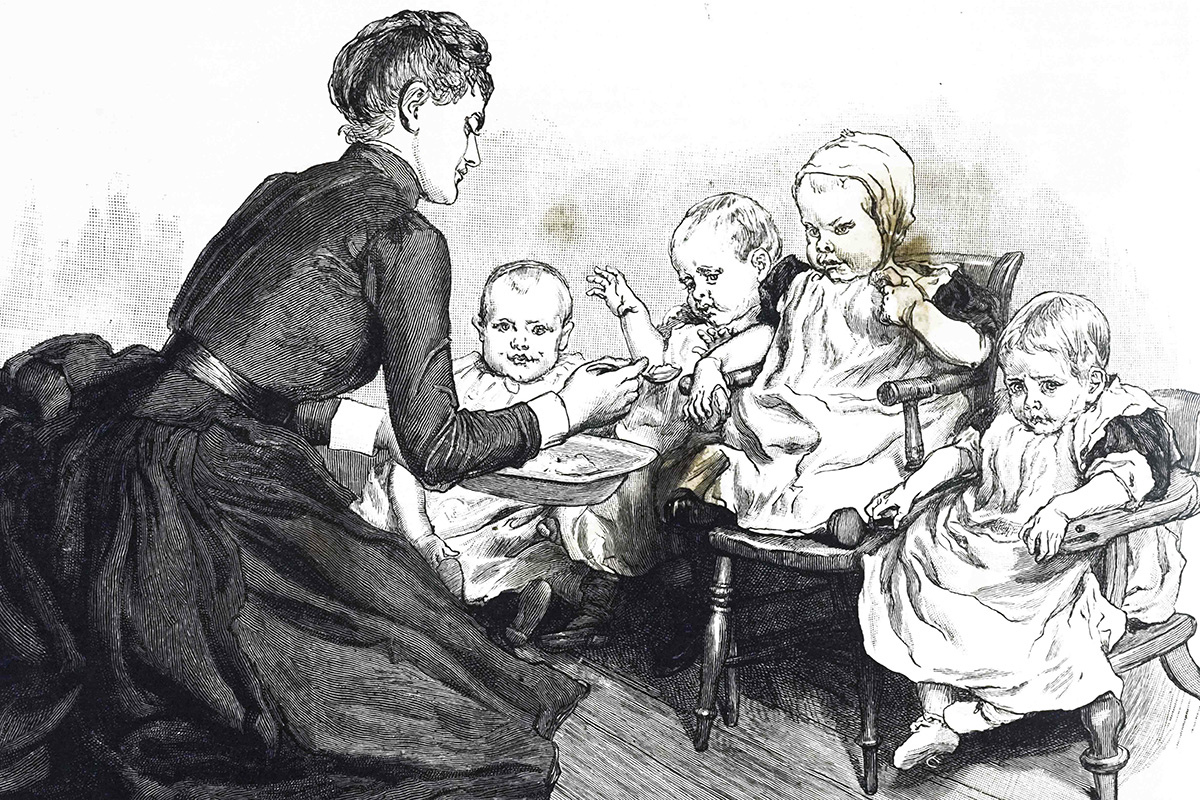
At this point, I realised I’d been asking the wrong question all along. I wanted to know what these children were. But the census was never trying to answer that question. It wasn’t recording accurate definitions; it was capturing how families, neighbours and communities understood a child’s circumstances. Those little words beside a name weren’t answers. They were clues.
The census was only the starting point. Understanding each child meant moving beyond it into birth registrations, parish records, old newspapers, workhouse admissions, old school records and probate records. Gradually, the labels gave way to reveal lives. The “nurse child” became Annie. The “orphan” became William. The “adopted” child became Sarah. They were no longer census entries, but children
whose lives had been shaped by love, loss, hardship, resilience and kindness.
So the next time you find a child living away from home, resist the temptation to accept the description at face value. Whether they are recorded as a “nurse child”, “orphan” or “adopted”, that single word is rarely the whole story. The census reduced them to a single word. Genealogy allows them to become people again.
After all, this journey began with one little girl recorded simply as a “nurse child”. One unexpected census entry uncovered an entire hidden history of childhood. The next one you find might do exactly the same.


